
A reliable pearl jewelry supplier in China should be evaluated on pearl knowledge, design understanding, MOQ structure, sampling process, material transparency, quality control, and communication — not on price alone. Buyers who skip these checks often discover the gaps only after production has already started.
The Problem: Price Looks Comparable, Capability Does Not
When brands first start sourcing pearl jewelry from China, most begin by collecting quotations. On paper, several suppliers can look almost identical — similar price ranges, similar photos, similar promises of “custom orders welcome.” The differences only become visible once a real project starts: one supplier asks precise questions about pearl grade and plating color, another sends back a generic response. One supplier flags that a design will be difficult to reproduce at scale, another quietly ships something close enough and hopes it passes.
For a brand placing its first order, that gap is expensive. A wrong supplier choice does not usually show up as a dramatic failure — it shows up as inconsistent pearls between batches, slow replies during a critical production window, or a sample that technically matches the brief but misses the spirit of the design.
What Actually Separates a Capable Supplier From a Risky One
Working across multiple material categories — freshwater pearls, sterling silver and gold-plated components, chain and clasp hardware — day to day involves coordinating between specialists rather than relying on a single production line for everything. That process makes a few evaluation points stand out as the ones that predict whether a project will go smoothly.
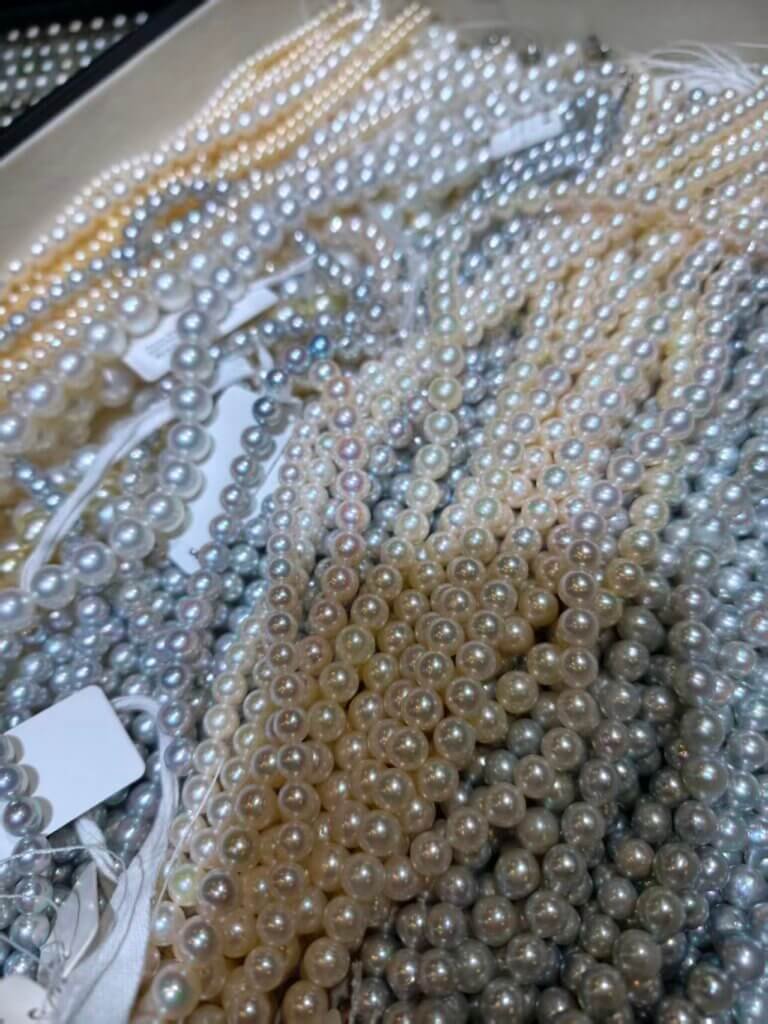
Pearl knowledge. A supplier should be able to explain, without hesitation, the difference between freshwater, Akoya, South Sea, and Tahitian pearls, and why a given grade or luster level affects price. Vague answers here are a signal that pearls are being resold rather than sourced and understood. For international grading references, GIA publishes standard terminology worth checking a supplier’s language against.
Design understanding. A capable supplier reads a reference image or sketch and asks clarifying questions — about proportions, plating tone, or how a clasp will function in daily wear — rather than immediately quoting a price. If no questions come back, the quote is often based on assumptions rather than the actual design.
MOQ structure. Ask exactly what counts toward the minimum. A supplier that mixes styles and colors freely within one MOQ is structured for brand development. A supplier that requires the full minimum per single style is structured for mass production and will be a poor fit for early collections.
Sampling process. How many rounds are typical, how long each round takes, and what happens if the first sample does not match. Suppliers who cannot describe a clear sampling process usually cannot deliver production consistency either.
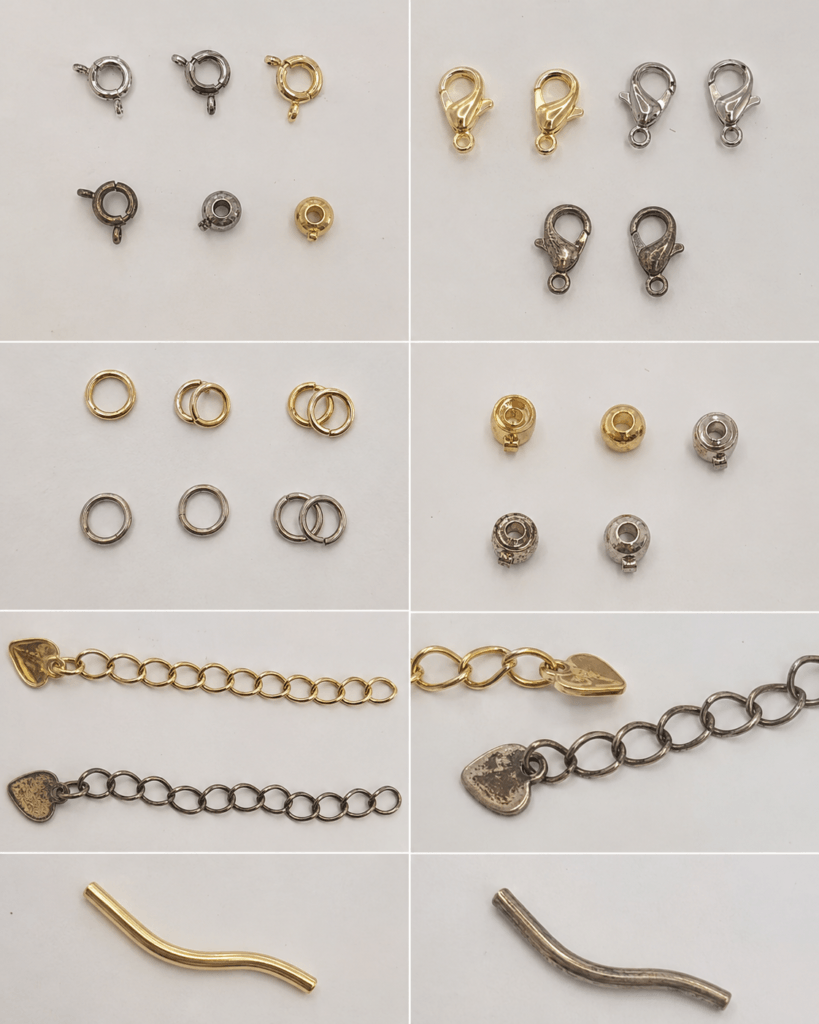
Material transparency. Confirm whether metal components are brass, stainless steel, or sterling silver, and whether plating is standard gold plating, vermeil, or solid gold. These distinctions affect both cost and durability, and a supplier should state them clearly without being pressed. A reliable way to check is to ask for a side-by-side look at findings — clasps, jump rings, extension chains, and connector bars — across the different finishes on offer, since color and quality differences that are hard to describe in a spec sheet become obvious once the pieces sit next to each other.
Quality control. Ask what happens between sample approval and bulk production — whether pearls are re-sorted for color and size consistency, and whether there is a checkpoint before shipping.
Communication. A single, consistent point of contact who understands the project history is a stronger signal than a large sales team. Projects that pass between multiple contacts tend to lose details along the way.
Packaging. Packaging is often treated as an afterthought until the first shipment arrives. Ask whether standard packaging is included in the quoted price, what branded or custom packaging options exist, and what the minimum quantity is for custom boxes or pouches. A supplier that can only describe generic bulk packaging is signaling that presentation-ready, retail-ready shipments are not part of their normal workflow.
Reorder consistency. This is the point most buyers only think about after a first order succeeds. Pearls are a natural material, so a second or third batch will never be pixel-identical to the first — but a capable supplier manages that variation instead of ignoring it. Ask whether they keep an approved sample on file, whether they document agreed color, size, and surface tolerances in writing, and whether they re-confirm before a reorder ships rather than assuming the previous specification still applies. A supplier who cannot describe how they maintain consistency across batches is one who has likely not been asked to before — which means your brand would be the one finding out the hard way.
Supplier Evaluation Checklist
| Area | What to Ask | Weak Signal |
|---|---|---|
| Pearl knowledge | What determines this pearl’s grade? | Vague or generic answers |
| Design understanding | What questions do they ask about the reference? | No clarifying questions at all |
| MOQ structure | Can styles and colors be mixed within the minimum? | Minimum required per single style |
| Sampling | How many rounds, how long, what if it doesn’t match? | No clear sampling process |
| Materials | Brass, stainless steel, or sterling silver? What plating? | Reluctance to specify |
| Quality control | What happens before bulk production ships? | No described checkpoint |
| Communication | Is there one consistent contact? | Passed between different people |
| Packaging | Is custom or branded packaging available, and at what minimum? | Only generic bulk packaging offered |
| Reorder consistency | Is an approved sample kept on file for future reference? | No system for maintaining batch consistency |
Common Mistakes Buyers Make
Choosing on price before capability. Two quotations at very different prices are often describing two different products, not two levels of markup on the same one.
Not stating a budget range up front. Without it, a supplier may quote toward a lower-cost configuration by default, which then requires a second round of clarification to reach the intended quality level.
Treating the first sample as final. One sampling round is rarely enough to confirm pearl color, plating tone, and construction all match at once.
Assuming a domain redirect means shared infrastructure. A supplier’s professionalism in written communication is not the same as production capability — both need to be checked separately.
Case Example: When the First Quotation Wasn’t the Right One
A gifting buyer in the United States initially requested a small batch of pearl bracelets and received an entry-level quotation based on standard components. During follow-up conversation, it became clear the intended use — a corporate gifting program — could support a noticeably better pearl grade and sterling silver gold-plated hardware instead. The order was revised accordingly before production began.
The lesson was not that the first quotation was wrong. It was that the buyer had not yet stated the budget and end use clearly enough for the supplier to quote toward the right tier. Buyers who share this context early, rather than after receiving a quote, tend to reach the right specification in one round instead of two.
Questions to Ask Before Placing a First Order
What pearl types and grades do you regularly work with, and why? What exactly counts toward the minimum order quantity? How many sample rounds are typical, and what happens if the first one is off? What metals and plating options are available, and how are they priced differently? What quality checks happen between sample approval and bulk shipment? Who will be my point of contact once the order is confirmed? What packaging is included by default, and what are the options for custom or branded packaging? How do you keep a second or third batch consistent with the first, once we’re ready to reorder?
Buyers evaluating freshwater, Akoya, South Sea, and Tahitian pearls or comparing pearl quality standards before a first order will find both our pearl type comparison guide and our guide on how to evaluate pearl quality useful alongside this checklist. For brands planning a full collection rather than a single product, our custom pearl jewelry development service walks through the process from concept to production.
Ideal Pearl Co. works with jewelry brands, boutiques, and wholesale buyers as a farm-direct pearl supplier and OEM development partner, offering flexible order structures and transparent material sourcing. Learn more about our approach on our About page, or browse our current pearl jewelry collection for reference styles.
Frequently Asked Questions
What should I ask a pearl jewelry supplier in China before ordering? Ask about pearl grading knowledge, MOQ structure, sampling process, material specifics, and who your ongoing point of contact will be. A supplier who answers these clearly and specifically is a stronger candidate than one offering only general reassurance.
Is a lower price always a red flag? Not always, but it should prompt a direct question: what pearl grade, metal, and plating does this price reflect? A lower price paired with vague answers is the actual warning sign, not the price itself.
How many sampling rounds are normal for a new pearl jewelry project? Most first-time projects need at least one revision round after the initial sample, particularly to confirm pearl color and plating tone side by side rather than from photos alone.
Can I mix styles and colors within one minimum order quantity? This varies by supplier. Structures that allow styles and colors to be mixed freely within the minimum are generally better suited to brand development and early-stage collections than to single-style bulk manufacturing.
Does a professional-looking website guarantee production capability? No. Written communication and visual presentation reflect marketing effort, not manufacturing capability. These should be verified separately through direct, specific questions about materials and process.
Will a reorder ever look exactly like the first batch? Not perfectly, since pearls are a natural material with some variation. A supplier who keeps an approved sample on file and re-confirms tolerances before shipping can keep that variation within an acceptable, consistent range — which is the realistic standard to ask for, rather than an exact match.
Explore More Pearl Guides
- Pearl Jewelry MOQ, Sampling & Pricing Guide
- What Can Be Customized in Pearl Jewelry Collections
- Private Label Pearl Jewelry: How to Start Your Own Brand
Ready to Build Your Collection?
Tell us your collection direction, target market, and customization needs — we’ll help you turn your ideas into a clear, market-ready pearl jewelry line.