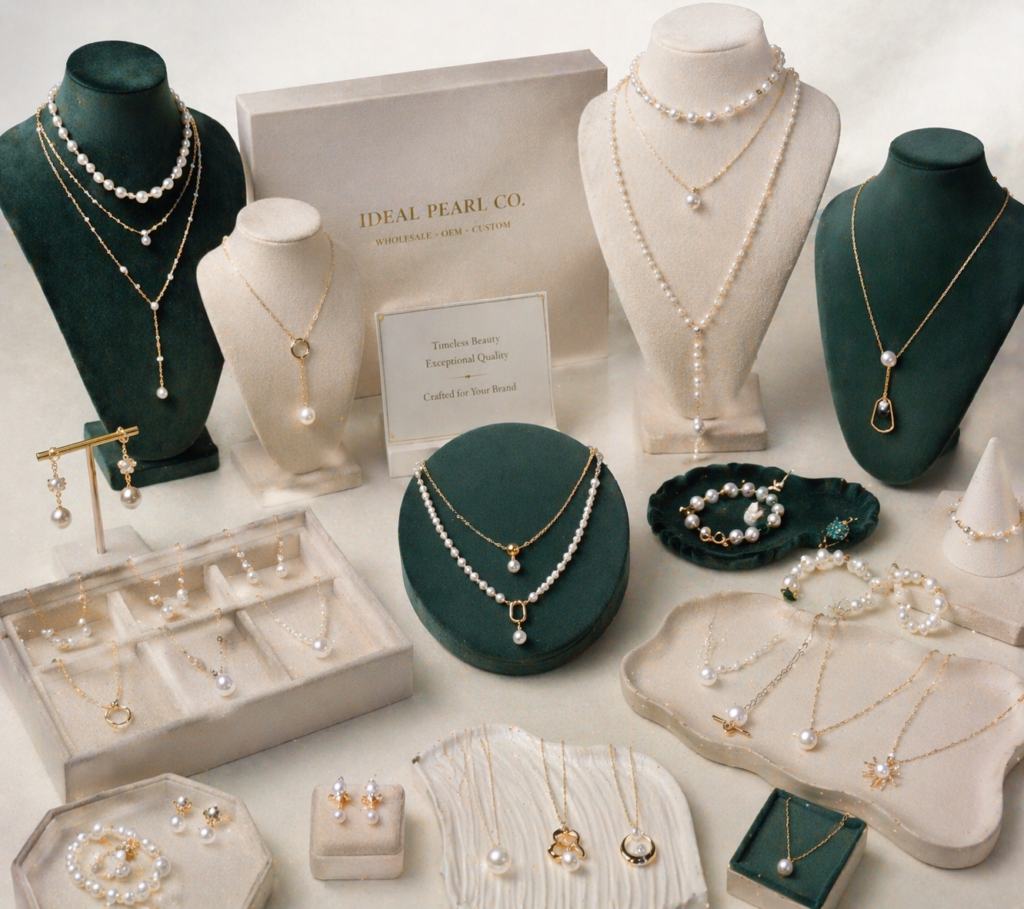
Pearl jewelry MOQ, sampling and pricing are three of the most common questions from brands and buyers approaching custom development for the first time, three questions come up consistently: how many pieces do I need to order, how does sampling work, and how is pricing structured? Understanding these three areas before entering a development conversation helps set realistic expectations, avoid misunderstandings, and move projects forward more efficiently.
Minimum Order Quantities
Minimum order quantity, or MOQ, refers to the smallest number of pieces a manufacturer will produce for a given style or design. MOQ requirements exist because custom production involves setup costs — sourcing specific materials, preparing findings, and configuring production lines — that need to be distributed across a sufficient number of units to be commercially viable for both parties.
MOQ varies depending on several factors:
- Design complexity — Simple pearl stud earrings or basic strand necklaces carry lower MOQs than multi-component designs with custom findings
- Material specification — Standard materials such as gold-filled chain and sterling silver findings allow for lower MOQs than custom-produced components
- Branding requirements — Pieces requiring logo stamping, custom clasps, or engraving typically require higher MOQs to cover tooling costs
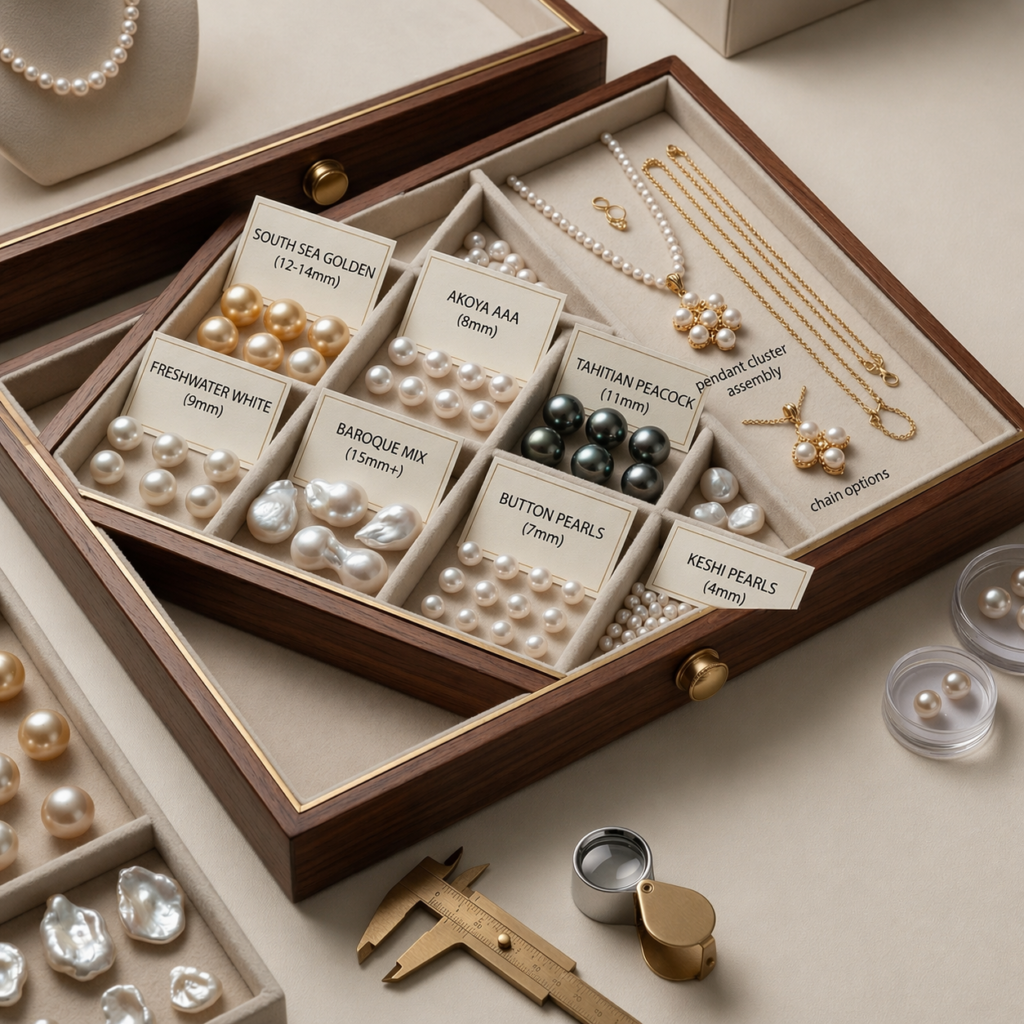
- Pearl type — Freshwater pearl designs generally carry lower MOQs than South Sea or Tahitian pearl pieces due to material availability and cost
General MOQ guidelines for pearl jewelry development:
| Design Type | Typical MOQ |
|---|---|
| Simple freshwater pearl earrings or pendants | 20–50 pieces per style |
| Pearl strand necklaces with standard findings | 30–50 pieces per style |
| Mixed material designs with custom components | 50–100 pieces per style |
| Branded pieces with logo stamping | 50–100 pieces per style |
| Solid gold settings with South Sea or Tahitian pearls | Negotiated per project |
For buyers developing their first collection, starting with three to five styles at standard MOQ levels is a practical approach that keeps initial investment manageable while producing enough range depth for a coherent collection launch.
How Sampling Works
Sampling is the stage of custom development where designs move from concept to physical product. It is an essential step in any custom project and should not be skipped or rushed, as the approved sample becomes the quality benchmark for production.
The sampling process typically works as follows:
Sample request — The buyer provides a design brief, reference images, or detailed specifications. The manufacturer reviews the brief and confirms feasibility, materials, and sample cost.
Sample production — The manufacturer produces one or more samples of the specified design. Sample lead times typically range from two to four weeks depending on design complexity and current production schedules.
Sample review — The buyer receives the sample and reviews it against the original brief. Feedback is provided covering any adjustments required to proportion, finish, length, or material.
Revision rounds — If adjustments are needed, a revised sample is produced. Most projects require one to two revision rounds before final approval. Complex designs may require more.
Sample approval — Once the buyer is satisfied with the sample, it is formally approved and becomes the production standard. No changes can be made to approved specifications without initiating a new sample round.
Sample costs are standard in custom development and reflect the material and labor involved in producing a one-off piece outside the normal production flow. Sample costs are typically credited against the first production order once a minimum order quantity is placed.
How Pricing Is Structured
Pearl jewelry pricing is built from several cost components that combine to determine the final unit price for a production order.
Pearl cost — The largest variable in most pearl jewelry pieces. Pearl cost is determined by type, size, quality grade, and quantity. Larger, higher-quality pearls command significantly higher per-unit costs.
Metal and findings cost — Chain material, findings, and settings contribute to unit cost based on material type and weight. Gold-filled and solid gold components carry higher material costs than sterling silver or brass-based options.
Labor cost — Assembly, stringing, setting, and finishing are labor components that vary by design complexity. Knotted strand necklaces, wire-wrapped settings, and multi-component designs carry higher labor costs than simple strung or glued designs.
Branding and packaging cost — Logo stamping, custom tags, and branded packaging add per-unit costs that depend on the complexity of the branding requirements and the quantity ordered.
Volume pricing — Unit prices decrease as order quantities increase. The price difference between MOQ and higher volume orders can be significant, particularly for designs with high setup costs.
Pricing Tiers by Collection Type
| Collection Type | Typical FOB Unit Price Range |
|---|---|
| Entry-level freshwater pearl earrings | USD 3–8 per pair |
| Mid-range freshwater pearl necklaces | USD 8–25 per piece |
| Premium Akoya pearl strand necklaces | USD 30–80 per piece |
| South Sea pearl pendant necklaces | USD 60–200+ per piece |
| Tahitian pearl jewelry | USD 40–150+ per piece |
Prices above are indicative FOB ranges and will vary based on specific pearl quality, metal material, design complexity, and order quantity.
What to Prepare Before Getting a Quote
To receive an accurate quote for a custom development project, it helps to have the following information ready:
- Pearl type, size, and quality requirements
- Metal material and color preference
- Design format — pendant, strand, earrings, bracelet
- Approximate length or size
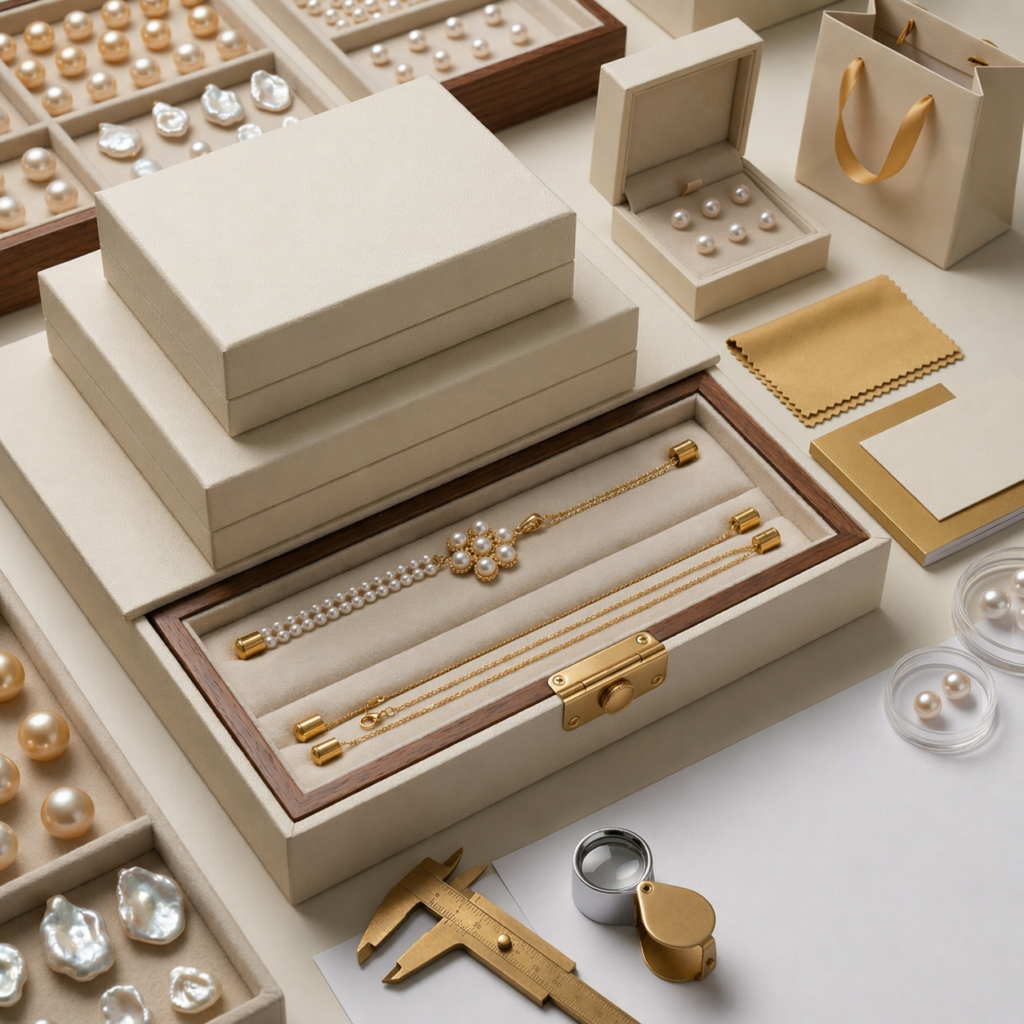
- Branding requirements — logo stamping, custom packaging
- Target quantity per style
- Target retail price or budget range
The more specific the brief, the more accurate the initial quote will be. Vague briefs typically result in wide price ranges that are not useful for planning purposes.
Explore More Pearl Guides
Looking to learn more? Browse our related guides:
- How Custom Pearl Jewelry Works: From Idea to Production
- What Can Be Customized in Pearl Jewelry Collections
- Best-Selling Pearl Jewelry Styles for Boutiques and Retailers
Ready to Start Your Custom Project?
Tell us your collection direction, target market, and customization needs — we’ll help you turn your ideas into a clear, market-ready pearl jewelry line.
,