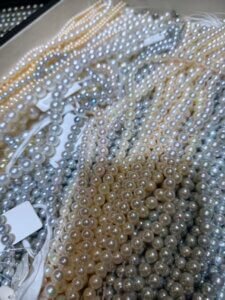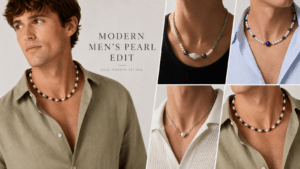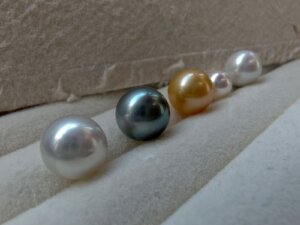
Comparing freshwater vs Akoya vs South Sea vs Tahitian pearls is usually the first step when selecting pearls for a jewelry collection. Each type offers distinct characteristics in origin, luster, size, and value — and choosing the right type directly affects your product positioning, pricing strategy, and target market. In short, freshwater pearls offer the widest range at the most accessible price, Akoya pearls define the classic white pearl strand, South Sea pearls lead the luxury segment with their size and golden tones, and Tahitian pearls are the only pearls that grow naturally in dark colors.
What Are the Four Main Types of Pearls?
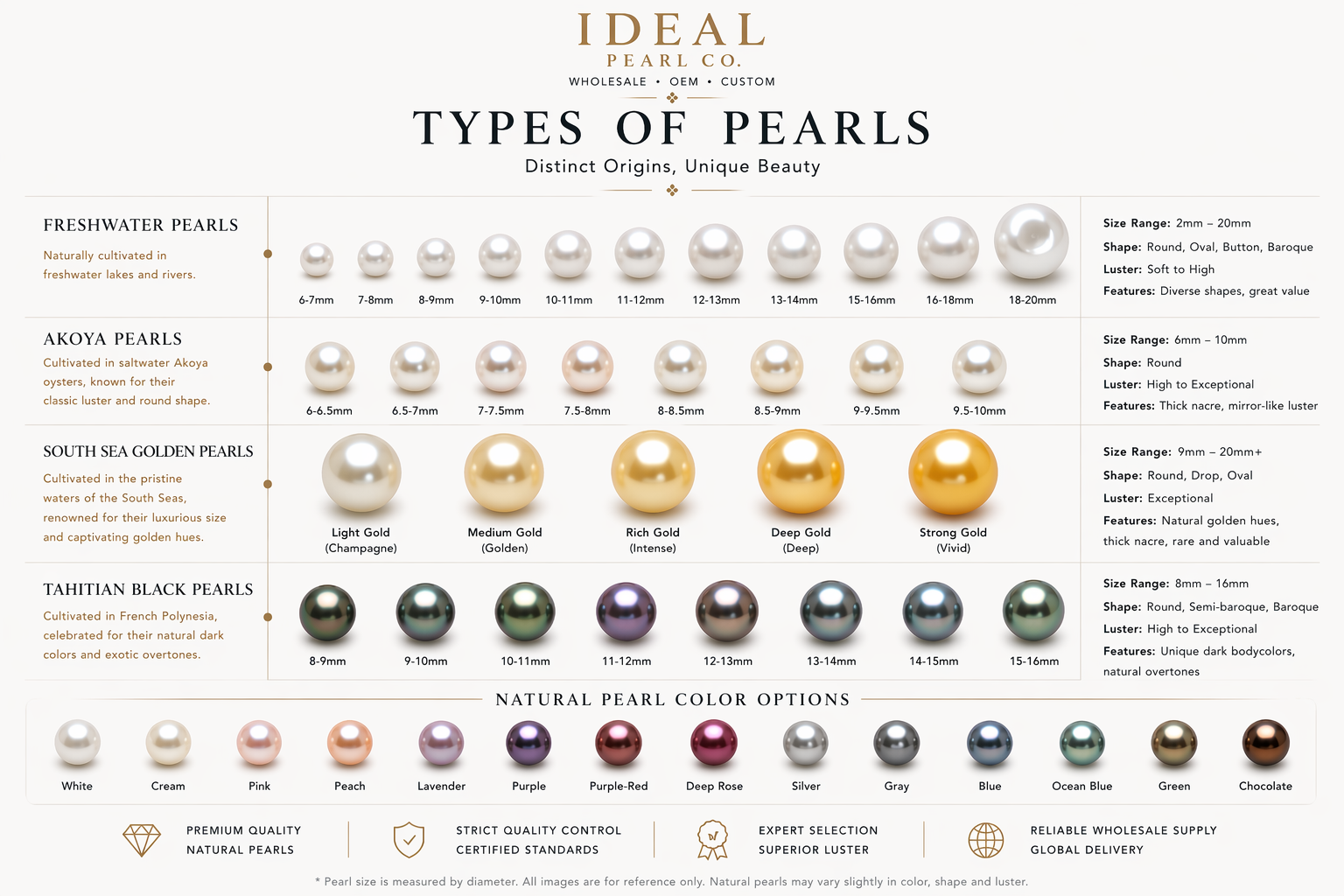
Pearls are broadly categorized by the mollusk species and the water environment in which they are cultivated. The four most commercially significant types are freshwater pearls, Akoya pearls, South Sea pearls, and Tahitian pearls. Each type serves a different segment of the jewelry market. GIA’s guide to pearl types explains how each one forms in more detail.
Freshwater Pearls
Freshwater pearls are cultivated primarily in China, using freshwater mussels rather than oysters. They are the most widely produced pearl type in the world, offering a broad range of sizes, shapes, and colors.
Key characteristics:
-
- Size range: 2mm to 13mm, with some baroque varieties reaching 15mm or more
-
- Colors: White, pink, lavender, peach, and natural mixed tones
-
- Luster: Soft to medium, with high-quality varieties approaching Akoya-level brilliance
-
- Surface: Generally good, with slight variations in shape
-
- Value: Most accessible price point among cultured pearls
Freshwater pearls are well suited for everyday jewelry, layered necklaces, stud earrings, and entry-level to mid-range collections. Their versatility and competitive pricing make them a strong foundation for wholesale and private label development.
Akoya Pearls
Akoya pearls are cultivated primarily in Japan and China, using the Pinctada fucata oyster in saltwater environments. They are widely regarded as the classic pearl, known for their refined round shape and brilliant luster.
Key characteristics:
-
- Size range: 5mm to 10mm
-
- Colors: White and cream, often with rose or silver overtones
-
- Luster: High to very high — one of the brightest among all pearl types
-
- Surface: Very clean and consistent
-
- Value: Mid to upper-mid price range
Akoya pearls are the standard choice for classic pearl necklaces, bridal jewelry, and professional collections. They appeal strongly to markets in Japan, Europe, and Australia where clean, refined aesthetics are preferred.
South Sea Pearls
South Sea pearls are produced by the Pinctada maxima oyster, cultivated primarily in Australia, Indonesia, and the Philippines. They are the largest of the commercially produced pearl types and carry significant prestige in the luxury jewelry market.
Key characteristics:
-
- Size range: 9mm to 20mm, averaging 12mm to 14mm
-
- Colors: White, silver, and golden tones
-
- Luster: Satiny and deep, with a distinctive warm glow
-
- Surface: Generally very clean, with a smooth, thick nacre
-
- Value: High to very high — among the most valuable cultured pearls
South Sea pearls are positioned for luxury collections, fine jewelry lines, and high-value wholesale. Their size and natural golden and white tones make them particularly desirable in the Australian and Southeast Asian markets. For a real development example, see how we approach
on solid 14K gold chains.
Tahitian Pearls
Tahitian pearls are cultivated using the Pinctada margaritifera oyster in the lagoons of French Polynesia. They are the only pearls that occur naturally in dark tones, ranging from charcoal grey to deep green and peacock.
Key characteristics:
-
- Size range: 8mm to 16mm
-
- Colors: Black, grey, green, blue, and peacock — a full spectrum of dark overtones
-
- Luster: High, with a distinctive metallic depth
-
- Surface: Good to very good, with natural color variation
-
- Value: Mid-high to high price range
Tahitian pearls are favored for statement pieces, contemporary jewelry design, and collections targeting younger luxury buyers. Their bold color range offers strong visual impact and is particularly well received in European and Australian boutique markets.
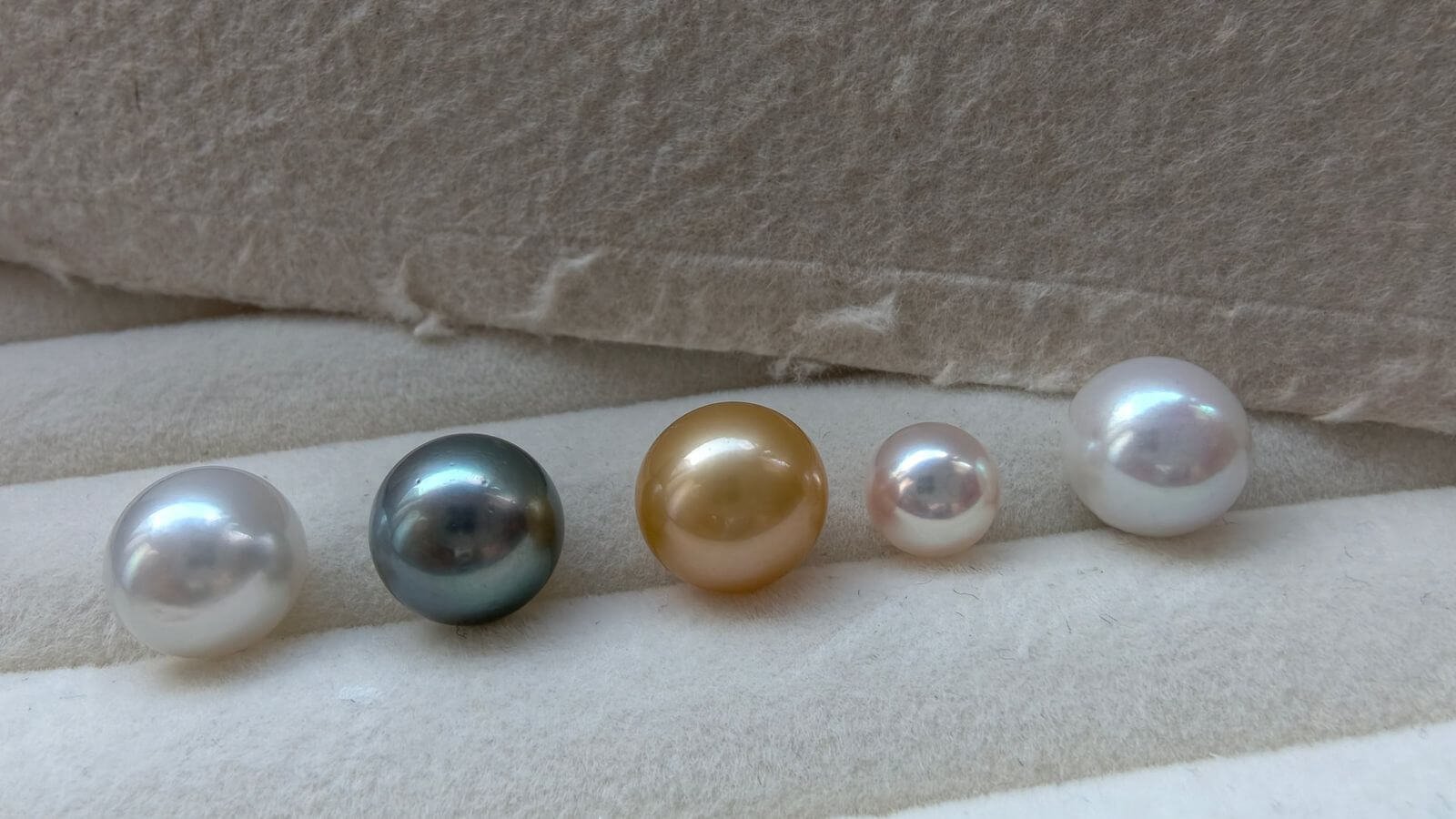
Comparison Summary
| Type | Origin | Size | Color | Luster | Price Range | Best Suited For |
|---|---|---|---|---|---|---|
| Freshwater | China | 2–13mm (baroque 15mm+) | Wide range | Soft–Medium | Accessible | Everyday, layered and trend-led pieces |
| Akoya | Japan / China | 5–10mm | White / Cream | Very High | Mid | Classic strands and bridal |
| South Sea | Australia / Indonesia | 9–20mm | White / Gold | Satiny | High | Luxury and fine jewelry lines |
| Tahitian | French Polynesia | 8–16mm | Dark tones | High | Mid-High | Statement and contemporary designs |
What to Check Before You Choose a Pearl Type
Most pearl sourcing problems do not come from choosing the wrong type. They come from not knowing what to ask. Before you commit to freshwater, Akoya, South Sea, or Tahitian pearls, these five checks will help you compare suppliers on equal terms. For a broader supplier checklist, see how to choose a reliable pearl jewelry supplier in China.
Is the Color Natural or Treated?
Golden South Sea and dark Tahitian pearls are the most valuable natural colors, which is also why they are the most often imitated. Dyed freshwater pearls can look very similar in photos, and many white pearls are routinely bleached to even out their tone. Treatment is not a problem in itself, but it should always be disclosed. In the United States, the FTC Jewelry Guides call for pearl treatments to be disclosed when they affect value or require special care. As a result, a reliable supplier will state natural or treated color on every quote and specification sheet.
Is the Pearl Type Named Correctly?
Well-matched round freshwater pearls can look very close to Akoya pearls, and large freshwater pearls are sometimes presented alongside South Sea pearls at a lower price. The difference matters, because your customers pay for the name on the label. Ask your supplier to confirm the pearl type in writing, so the description on your product page stays accurate.
How Thick Is the Nacre?
Nacre is the layered coating that gives a pearl its luster. Akoya, South Sea, and Tahitian pearls grow around a bead, so their nacre thickness depends on how long the pearl stayed in the oyster. Thin nacre can wear or chip with daily use, which leads to returns. Most freshwater pearls, by contrast, are solid nacre, which makes them a durable choice for everyday pieces. For high-value strands, ask about nacre quality before you approve a sample.
What Does “AAA” Actually Mean?
There is no single grading standard that every pearl supplier follows. As a result, one supplier’s AAA can look like another supplier’s AA. Compare samples side by side under the same light rather than relying on grade names, and keep your approved sample as the reference for future orders. Our guide on how to evaluate pearl quality explains what to look for in luster, surface, and shape.
Can the Supplier Match Your Size and Quantity?
Freshwater pearls are produced in large volumes, so matched sizes and colors are easier to source for small batches and reorders. Large, well-matched South Sea and Tahitian strands are much rarer, so they take longer to collect, and prices rise steeply as size increases. Therefore, if your collection depends on fast reorders, plan your pearl type around supply as well as style. Our pearl size guide shows how each size looks in finished jewelry.
Choosing the Right Pearl Type for Your Collection
The right pearl type depends on your target market, price positioning, and collection direction. For accessible everyday jewelry, freshwater pearls offer the best flexibility. For classic bridal or professional lines, Akoya pearls provide the refined finish buyers expect. For luxury and high-value collections, South Sea and Tahitian pearls deliver the prestige and visual impact that support premium pricing.
If you are still deciding, three questions usually point to the right answer:
-
- What will your customers pay? Freshwater pearls work across the widest price range, while South Sea and Tahitian pearls support premium retail prices.
-
- What story does your brand tell? Akoya suits classic and bridal collections, freshwater suits trend-led and layered designs, and Tahitian suits bold, modern pieces.
-
- How often will you reorder? Collections built for frequent restocks are easier to manage with freshwater or Akoya pearls.
If you are developing a new collection and need guidance on pearl selection, material combinations, or sourcing options, we are happy to help you build a clear and workable direction. For a real example of how pearl selection works in practice, see our custom baroque pearl necklace project.
Frequently Asked Questions
Which pearl type is best for a new jewelry brand? Freshwater pearls are usually the most practical starting point, because they offer the widest choice of shapes, sizes, and colors at an accessible price. Brands often add Akoya, South Sea, or Tahitian pieces later as their collection moves upmarket.
Are freshwater pearls lower quality than Akoya pearls? Not necessarily. Akoya pearls are known for a rounder shape and sharper luster, but high-grade freshwater pearls can come very close. In addition, most freshwater pearls are solid nacre, which makes them durable. The right choice depends on the look and price point you need.
Are golden and black pearls always natural color? No. Natural golden South Sea pearls and naturally dark Tahitian pearls do exist, but dyed pearls in similar colors are common. Always ask your supplier to state whether the color is natural or treated.
Which pearl type is best for everyday wear? Freshwater pearls are often the most practical choice for everyday jewelry, because most are solid nacre and hold up well to daily wear. Akoya, South Sea, and Tahitian pearls also wear well when the nacre has good thickness.
What is the minimum order quantity? For most of our styles, the minimum order quantity is 20 pieces total, with styles and colors freely mixed. A few styles require 20 pieces per style, and we confirm this on every quote. Our small-batch pearl gifting project shows how a smaller order is handled from concept to delivery.
Ready to Start Your Pearl Collection?
Contact us to discuss your collection direction, target market, and customization needs. We work with brands, retailers, and wholesale buyers across Australia, Europe, and beyond.
Explore More Pearl Guides
Looking to learn more? Browse our related guides:
Ready to Build Your Collection?
Tell us your collection direction, target market, and customization needs — we’ll help you turn your ideas into a clear, market-ready pearl jewelry line.