
Chain materials for pearl jewelry directly affect the overall aesthetic, durability, and price positioning of a collection. For brands and wholesale buyers developing pearl collections, understanding the properties and applications of different chain materials helps ensure that product decisions are aligned with collection goals and customer expectations.
Gold-Filled
Gold-filled chain is made by bonding a layer of solid gold to a base metal core, typically brass. The gold layer is significantly thicker than gold plating, making it more durable and longer lasting.
Key characteristics:
- Appearance: Rich gold tone, close to solid gold in visual quality
- Durability: High — resistant to tarnishing and daily wear
- Skin sensitivity: Generally safe for most skin types
- Price point: Mid-range, accessible for retail collections
Gold-filled chain is a strong choice for mid-range pearl jewelry collections targeting everyday wear and gifting markets. It offers a premium appearance at an accessible price, making it well suited for retail and wholesale buyers who need reliable quality without the cost of solid gold.
Sterling Silver
Sterling silver is an alloy of 92.5% pure silver and 7.5% other metals, typically copper. It is one of the most widely used chain materials in pearl jewelry globally.
Key characteristics:
- Appearance: Bright white metal with high reflectivity
- Durability: Good — requires occasional polishing to maintain appearance
- Skin sensitivity: Suitable for most skin types
- Price point: Accessible to mid-range
Sterling silver pairs naturally with white and cream freshwater and Akoya pearls, creating a clean, classic aesthetic. It is widely used in bridal collections, minimalist everyday jewelry, and professional wear lines. In the Australian and European markets, sterling silver with white pearl combinations consistently performs well across retail and wholesale channels.
Gold Vermeil
Gold vermeil is sterling silver that has been plated with a thick layer of gold, typically 2.5 microns or more. It offers the appearance of gold at a lower price point than gold-filled or solid gold.
Key characteristics:
- Appearance: Warm gold tone over a silver base
- Durability: Moderate — the gold layer can wear over time with heavy use
- Skin sensitivity: Generally safe, as the base is sterling silver
- Price point: Mid-range
Gold vermeil is particularly popular in boutique and contemporary jewelry markets where a gold aesthetic is desired but solid gold pricing is not appropriate for the collection. It works well with warm-toned pearls such as cream freshwater, golden South Sea, and peach-toned baroque pearls.
Solid Gold — 9K, 14K, 18K
Solid gold chain is the premium standard for fine pearl jewelry. Gold purity is measured in karats, with 18K being the most widely used in fine jewelry internationally.
Key characteristics:
- 9K gold — 37.5% pure gold, more affordable, widely used in the UK and Australian markets
- 14K gold — 58.5% pure gold, the standard in the US market, good balance of durability and value
- 18K gold — 75% pure gold, the international fine jewelry standard, softer but more lustrous
Solid gold chain is the appropriate choice for luxury pearl collections, fine jewelry lines, and high-value custom development. South Sea and Tahitian pearls are most commonly paired with 18K gold settings due to the premium positioning of both materials.
Rhodium-Plated Silver
Rhodium plating is applied over sterling silver to create a bright, reflective white finish that resists tarnishing more effectively than unplated silver.
Key characteristics:
- Appearance: Bright white, mirror-like finish
- Durability: Good — rhodium layer protects the silver beneath
- Price point: Similar to sterling silver with a slight premium
Rhodium-plated silver is commonly used in bridal and formal wear collections where a consistently bright white metal tone is required. It pairs well with white and cream pearls and is a popular choice for wedding jewelry sets.
Brass with Gold or Silver Plating
Brass is a cost-effective base metal that is widely used in fashion and entry-level jewelry. When plated with gold or silver, it offers an accessible price point for high-volume retail collections.
Key characteristics:
- Appearance: Depends on plating color — gold or silver tone
- Durability: Moderate — plating can wear over time
- Price point: Entry-level to accessible
Brass-based chain is appropriate for fashion-forward collections, trend-led seasonal pieces, and entry-level retail lines where price accessibility is the primary consideration.
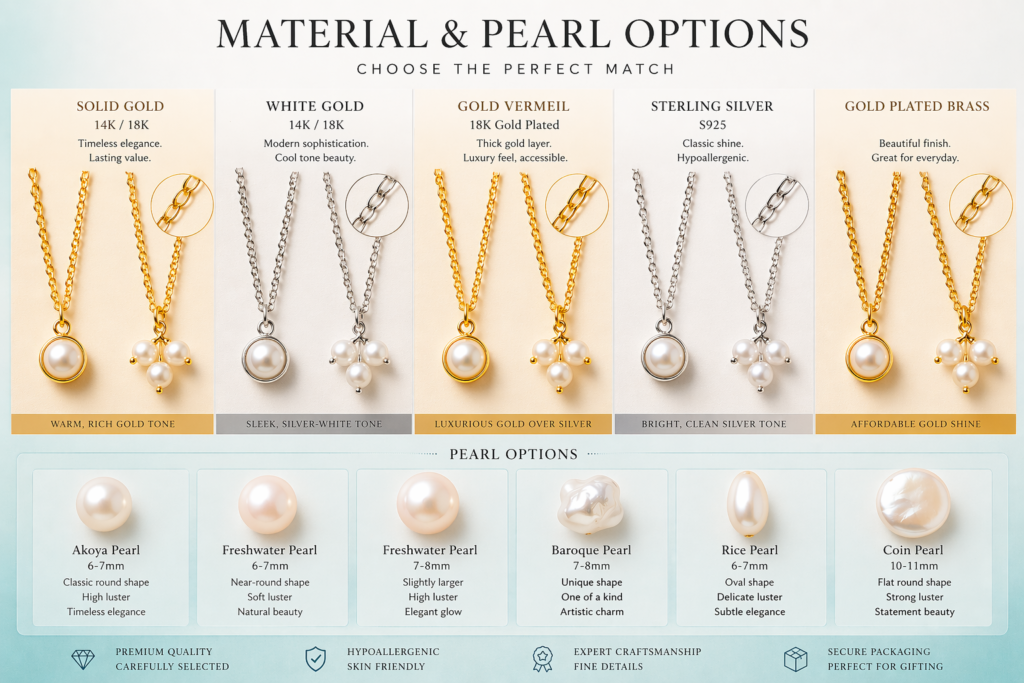
Chain Material Selection Guide
| Material | Best For | Price Point |
|---|---|---|
| Gold-Filled | Everyday wear, mid-range retail | Mid |
| Sterling Silver | Classic, bridal, minimalist | Accessible–Mid |
| Gold Vermeil | Boutique, contemporary | Mid |
| Solid Gold 18K | Fine jewelry, luxury | High |
| Rhodium Silver | Bridal, formal | Mid |
| Brass Plated | Fashion, entry-level | Entry |
Material and Pearl Pairing Recommendations
The chain material should complement the pearl type and collection positioning:
- White freshwater pearls → Sterling silver or rhodium-plated silver
- Cream and peach pearls → Gold vermeil or gold-filled
- Golden South Sea pearls → 18K solid gold
- Tahitian pearls → 18K white or yellow gold
- Baroque freshwater pearls → Gold-filled or sterling silver for contemporary styling
Explore More Pearl Guides
Looking to learn more? Browse our related guides:
- Pearl Necklace Length Guide: How to Choose the Right Length for Every Style
- How Pearls Are Used in Modern Jewelry Design
- How Custom Pearl Jewelry Works: From Idea to Production
Ready to Build Your Collection?
Tell us your collection direction, target market, and customization needs — we’ll help you turn your ideas into a clear, market-ready pearl jewelry line.