Gold plated, gold filled and gold vermeil pieces can look identical when they leave the factory. Under the surface, however, they are built differently. As a result, they wear differently and suit different designs.
For a jewelry brand, boutique retailer or wholesale buyer, this choice shapes how a collection looks, feels and lasts. It also decides which designs are possible in the first place.
This guide explains gold plated vs gold filled vs gold vermeil from a manufacturer’s point of view. In addition, it shows how each finish works on pearl jewelry, from wedding sets to holiday gifts.
Quick Answer
- Gold plated: a thin gold layer on brass, copper or stainless steel. Best for detailed, design-led and trend-driven styles.
- Gold vermeil: a thick gold layer over sterling silver. Best for demi-fine pieces with cast detail.
- Gold filled: a thick, mechanically bonded gold layer. Best for chains and everyday staples.
1. Gold Plated
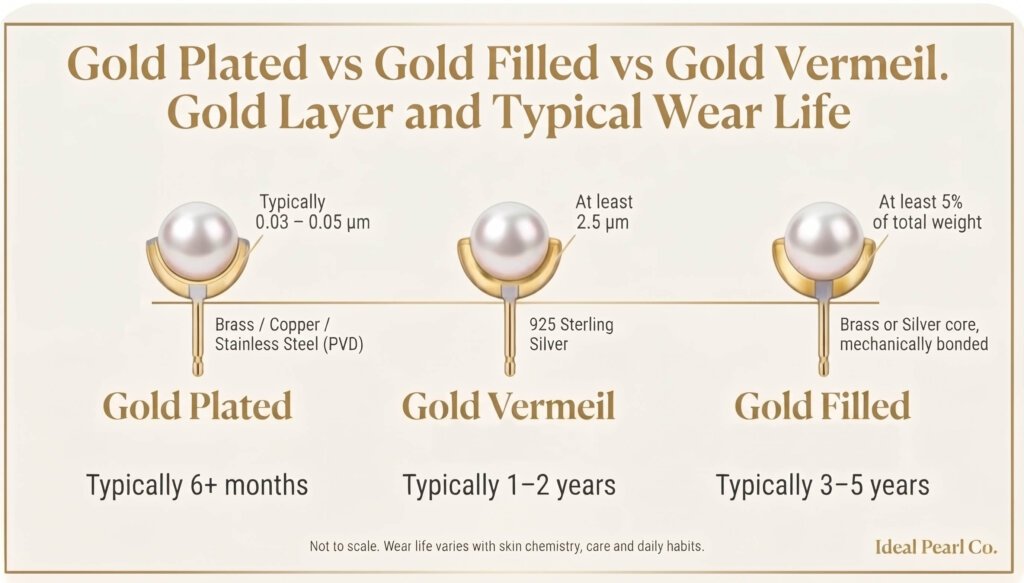
What it is. A thin layer of gold applied to a base metal by electroplating or PVD (Physical Vapor Deposition). The base is usually brass, copper or stainless steel.
Gold thickness. Most electroplated pieces carry a very thin layer, typically 0.03 to 0.05 microns. This is the industry norm, and it is not always stated openly. Thicker plating is possible for specific projects, and we can make it to order.
Why brands choose brass and copper. These metals shape and cast easily. As a result, they give designers far more creative room, from sculptural pendants to detailed settings. They also let a brand test a new style in the market without a large commitment. Many established brands use plating for exactly these reasons.
Durability. Typically about six months or more of regular wear, depending on care. PVD on stainless steel generally lasts longer, because the coating is harder and holds its color better.
Skin note. The gold layer is thin, so friction wears it down over time. Once the base metal is exposed, wearers who are sensitive to nickel or copper may react.
Best for:
- Detailed, sculptural and trend-led designs
- Seasonal and festival collections
- Brands that want to test new styles
On pearl jewelry: statement pendants, ornate settings, earrings and bridal accessories.
2. Gold Vermeil
What it is. A thick layer of gold, applied by electroplating, over solid 925 sterling silver. It sits between fashion and fine jewelry.
Requirements. The base must be sterling silver, not brass or copper. The gold layer must be at least 2.5 microns thick. This follows FTC Jewelry Guides and is what buyers expect when they see the word “vermeil”.
Durability. Typically one to two years of regular wear with proper care.
Skin note. A sterling silver base is a lower-risk choice for sensitive skin than brass. Even after long wear, silver shows underneath rather than an industrial base metal.
Making it. Silver can be cast, so vermeil suits detailed shapes, such as textured rings and pearl settings with fine prongs.
Best for:
- Demi-fine collections
- Designers who want a silver base and cast detail
On pearl jewelry: studs, pendants, ring settings and cast clasps from our pearl jewelry collection.
Note: gold vermeil is made to order, with a thicker gold layer than standard plating.
3. Gold Filled
What it is. A thick layer of karat gold mechanically bonded to a base metal under heat and pressure. The core is usually brass or silver.
Requirements. Under FTC rules, the gold layer must make up at least 1/20 (5%) of the item’s total weight. Gold filled is measured by weight, not microns, and the karat must be stated with the ratio.
Important. Gold filled is bonded mechanically. A piece that only has a thick electroplated layer is not gold filled, so confirm the process with your supplier.
Durability. Typically several years of regular wear. The layer is thick and bonded, so it does not flake the way plating does.
Making it. Gold filled starts as bonded sheet and wire. Therefore, it suits chains, wire, tubes, beads and bangles, but not complex cast shapes.
Best for:
- Everyday staples worn often
- Chains, bangles and minimalist pieces
On pearl jewelry: necklace chains, extenders and simple wire-wrapped designs. For a closer look at metals in pearl necklaces, read our guide on chain materials for pearl jewelry.
Comparison Table
Here is how gold plated vs gold filled vs gold vermeil compare at a glance.
| Gold Plated | Gold Vermeil | Gold Filled | |
|---|---|---|---|
| Base metal | Brass, copper, stainless steel | 925 sterling silver | Brass or silver core |
| How gold is applied | Electroplating or PVD | Thick electroplating | Mechanical bonding (heat and pressure) |
| Gold amount | Typically 0.03–0.05 µm | At least 2.5 µm | At least 5% of total weight |
| Design freedom | Very high | High (cast detail) | Limited to wire, sheet and chain forms |
| Typical wear life | Months (PVD longer) | 1–2 years | Several years |
| Market position | Design-led fashion | Demi-fine | Everyday fine-style staples |
Wear life is a typical expectation. It varies with skin chemistry, care and daily habits.
What All Three Have in Common
- All use real gold. The difference is how much, and how it is attached.
- All look similar when new. You cannot tell them apart by eye on day one. Therefore, always ask your supplier for a written specification.
- All need the same care. See the care section below.
How to Tell Them Apart by Stamp
| Finish | Common marks |
|---|---|
| Gold plated | GP, GEP, HGE, or no mark |
| Gold vermeil | 925, Sterling, 925 Vermeil |
| Gold filled | GF, or a ratio such as 1/20 with the karat and GF |
Stamps help, but they are not proof. Ask for the specification in writing.
Matching the Finish to the Occasion
Our customers buy for many occasions, and each one calls for a different kind of piece.
- Weddings and bridal parties. Bridal sets, bridesmaid gifts and keepsake pieces. Vermeil and gold filled suit pieces meant to be worn again, and plated designs suit detailed bridal accessories.
- Mother’s Day. Pearl pendants and earrings, often with a personal touch. Vermeil suits delicate cast pendants.
- Christmas and holiday gifting. Gift sets and seasonal collections. Gold plated lets brands launch new festive designs in small batches.
- Other occasions. Valentine’s Day, birthdays, anniversaries, graduations, corporate and event gifts, and resort and hotel retail.
Which Finish Fits Your Goal
| Your goal | Consider |
|---|---|
| Detailed, sculptural or trend-led designs | Gold plated on brass or copper |
| Testing a new style in the market | Gold plated |
| Demi-fine collection with cast detail | Gold vermeil |
| Long-wearing chains and everyday staples | Gold filled |
| Consistent color across several collections | Any finish, with a master color sample |
For larger companies, consistency matters as much as the finish. In addition, many buyers keep a second supplier ready as backup supply, so color and specification must match across orders.
Care: What Applies to All Three Finishes
Gold plated, gold vermeil and gold filled all last longer with the same habits:
- Remove pieces before showering, swimming, exercising and sleeping.
- Keep them away from water and skincare products, including lotion, perfume, sunscreen and hairspray.
- Put jewelry on last when you dress, and take it off first.
- Wipe with a soft, dry cloth and store in a dry pouch.
These habits also protect the pearls, which dislike moisture and cosmetics too. For more on judging pearls themselves, see our guide on how to evaluate pearl quality.
Case Study: Five Collections, One Gold Tone
The problem. A founder was launching an independent jewelry brand with five collections and her own logo. Her clasps, jump rings, chains and settings came from different suppliers. Custom molds for every part would have pushed costs too high.
The larger problem was color. Some parts looked harsh yellow, some looked pale and some had a reddish undertone. Together, they read as a mix of third-party parts, not one brand.
What we did.
- Set a master color. We chose her hero gold tone and made a physical master sample plate.
- Adjusted the plating. We tuned the plating across her brass and vermeil components so every batch stayed within the same color tolerance.
- Re-plated mismatches. Parts that did not match were stripped and re-plated until all five collections shared one tone.
The result. Her launch looked like one coherent brand. She did not redesign any piece, and she did not pay for new molds.
The lesson. Lock in your gold color early. Approve it against a physical sample, not a screen. The same approach applies to our custom pearl necklace development, where metal parts and pearls must look like one piece.
How We Work With Your Finish
We have sourced pearls directly from farms in China for over 16 years, and we coordinate metal parts and finishing around them. Read more about our farm-direct sourcing. As a result, the metal and the pearls are developed as one piece.
- Metals. S925 silver, solid gold, gold filled, brass and stainless steel. All can be color-plated.
- Plating. Standard plating is typically 0.03–0.05 microns. Thicker plating, gold filled and gold vermeil are made to order.
- Color matching. We work from a master color plate, so repeat orders match.
- Quantities. Order quantities vary by style.
- Samples. Ready-made styles can sometimes be sampled quickly, while new designs take longer because of mould and approval steps.
- Documents. We can arrange compliance documents with you when your market requires them.
Not sure which finish suits your design? Contact us with your design, and we will recommend one.
Frequently Asked Questions
Why do so many brands use brass and copper?
These metals give designers more shaping and casting freedom. As a result, intricate styles become possible, and brands can test them in the market with confidence.
How do I verify what my manufacturer is making?
Ask for a written specification and a physical color sample. For vermeil, confirm 925 sterling silver and at least 2.5 microns of gold. For gold filled, confirm the karat, the 1/20 ratio and the bonding process.
Can customers wear these pieces in water?
We advise against it for all three finishes. Water and skincare products shorten the life of any gold layer, so customers should remove their jewelry before showering or swimming.
Which finish is best for a private label brand?
It depends on your designs and your story. Choose gold plated for detailed and trend-led styles. Choose gold vermeil for demi-fine cast designs. Choose gold filled for chains and everyday staples.
Explore More Pearl Guides
- Pearl Size Guide: How to Choose the Right Pearl Size from 2mm to 15mm
- How to Evaluate Pearl Quality: Luster, Surface, Shape and Value
Ready to Build Your Collection?
Tell us your collection direction, target market, and customization needs — we’ll help you turn your ideas into a clear, market-ready pearl jewelry line.