Custom pearl jewelry works through a structured process that moves from initial concept through material selection, sampling, refinement, and production. For brands, boutiques, and wholesale buyers approaching custom development for the first time, understanding how this process works helps set realistic expectations, avoid common mistakes, and build a collection that is both commercially viable and market-ready.
What Is Custom Pearl Jewelry Development?
Custom pearl jewelry development refers to the process of creating jewelry pieces that are designed and produced according to a buyer’s specific requirements, rather than selecting from existing ready-made inventory. This includes decisions about pearl type, size, quality, chain material, length, findings, branding details, and packaging.
Custom development is used by:
- Private label brands building their own jewelry identity
- Boutiques seeking exclusive pieces not available through standard wholesale channels
- Retailers developing collections tailored to a specific customer demographic
- OEM and ODM buyers requiring manufacturer-developed designs under their own brand
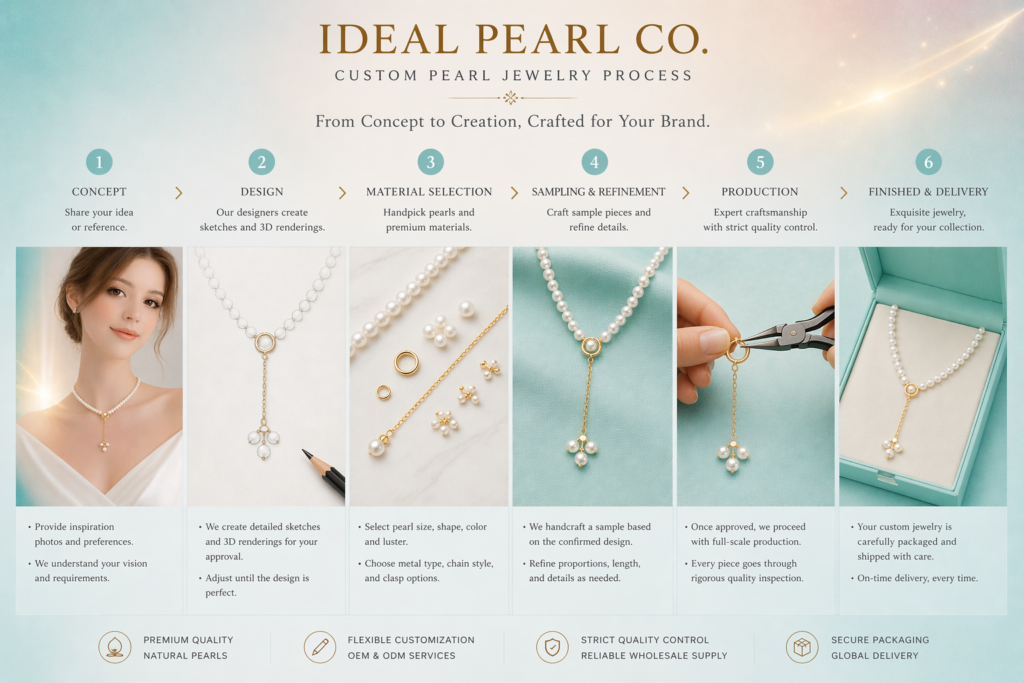
Step 1: Define Your Collection Direction
The starting point for any custom development project is a clear collection brief. This does not need to be a detailed technical document — it can be as simple as a mood board, a set of reference images, or a written description of the aesthetic and target customer.
A useful collection brief typically covers:
- The overall aesthetic direction — minimalist, classic, contemporary, luxury
- The target customer and market — boutique retail, bridal, everyday wear, wholesale
- The pearl types and sizes you are considering
- Your target retail price range
- Any specific design elements — chain style, length, findings, branding
The clearer your brief, the more efficiently the development process moves. Vague briefs lead to multiple revision rounds and delayed timelines.
Step 2: Pearl and Material Selection
Once the collection direction is established, the next step is selecting the specific pearls and materials that will be used. This is typically done through sample review, where the manufacturer provides pearl samples across the relevant size, quality, and color range for the buyer to assess.
Key decisions at this stage:
- Pearl type — freshwater, Akoya, South Sea, Tahitian
- Size range — matched to collection positioning and price point
- Quality grade — luster, surface, shape requirements
- Chain material — gold-filled, sterling silver, vermeil, solid gold
- Findings and fittings — clasps, jump rings, ear wires, pendant bails
Material decisions at this stage directly determine the final product cost and retail price positioning, so it is important to confirm these choices before moving to sampling.
Step 3: Sampling
Sampling is the stage where the collection brief becomes a physical product. The manufacturer produces one or more samples of each design for the buyer to review, assess, and approve.
What to expect during sampling:
- First samples may require adjustments to proportion, length, or finish
- Sample lead times typically range from two to four weeks depending on complexity
- Sample costs are standard in custom development and are often credited against the first production order
- Multiple sample rounds may be required before final approval
Reviewing samples carefully at this stage is essential. Approving a sample that does not fully meet your requirements will result in production that reflects those same issues at scale.
Step 4: Branding and Packaging
For private label and OEM development, branding and packaging are typically confirmed alongside or immediately after sample approval. This includes:
- Logo stamping or engraving on metal components
- Branded clasps or tags
- Custom jewelry cards, pouches, or boxes
- Care instruction inserts
- Any retail-ready packaging requirements
Packaging decisions can significantly affect per-unit costs and minimum order quantities, so it is important to confirm these requirements early in the development process.
Step 5: Production and Quality Control
Once samples are approved and all specifications are confirmed, production begins. Production lead times vary depending on order volume, design complexity, and current manufacturing capacity, but typically range from three to six weeks for standard collections.
Quality control during production includes:
- Pearl grading and matching before stringing or setting
- In-process checks on chain length, clasp function, and findings
- Final inspection before packaging and shipment
For first-time custom orders, requesting a pre-shipment inspection report or photos provides an additional layer of confidence before goods are dispatched.
Minimum Order Quantities
Custom development projects typically involve minimum order quantities per design or per style. MOQ requirements vary depending on the complexity of the design and the materials involved.
General MOQ guidelines:
- Simple freshwater pearl necklaces and earrings — from 20 to 50 pieces per style
- Mixed material designs with custom findings — from 50 to 100 pieces per style
- Solid gold settings with South Sea or Tahitian pearls — negotiated on a per-project basis
For buyers new to custom development, starting with a focused range of three to five styles allows for manageable MOQs while still building a cohesive collection.
Timeline Overview
| Stage | Typical Timeline |
|---|---|
| Collection brief and material selection | 1–2 weeks |
| First sample production | 2–4 weeks |
| Sample review and revision | 1–2 weeks |
| Branding and packaging confirmation | 1–2 weeks |
| Production | 3–6 weeks |
| Quality control and shipment | 1–2 weeks |
Total timeline from brief to delivery typically ranges from eight to sixteen weeks depending on project complexity and revision rounds.
Explore More Pearl Guides
Looking to learn more? Browse our related guides:
- What Can Be Customized in Pearl Jewelry Collections
- Pearl Jewelry MOQ, Sampling & Pricing Guide
- How to Evaluate Pearl Quality: Luster, Surface, Shape and Value
Ready to Start Your Custom Project?
Tell us your collection direction, target market, and customization needs — we’ll help you turn your ideas into a clear, market-ready pearl jewelry line.