
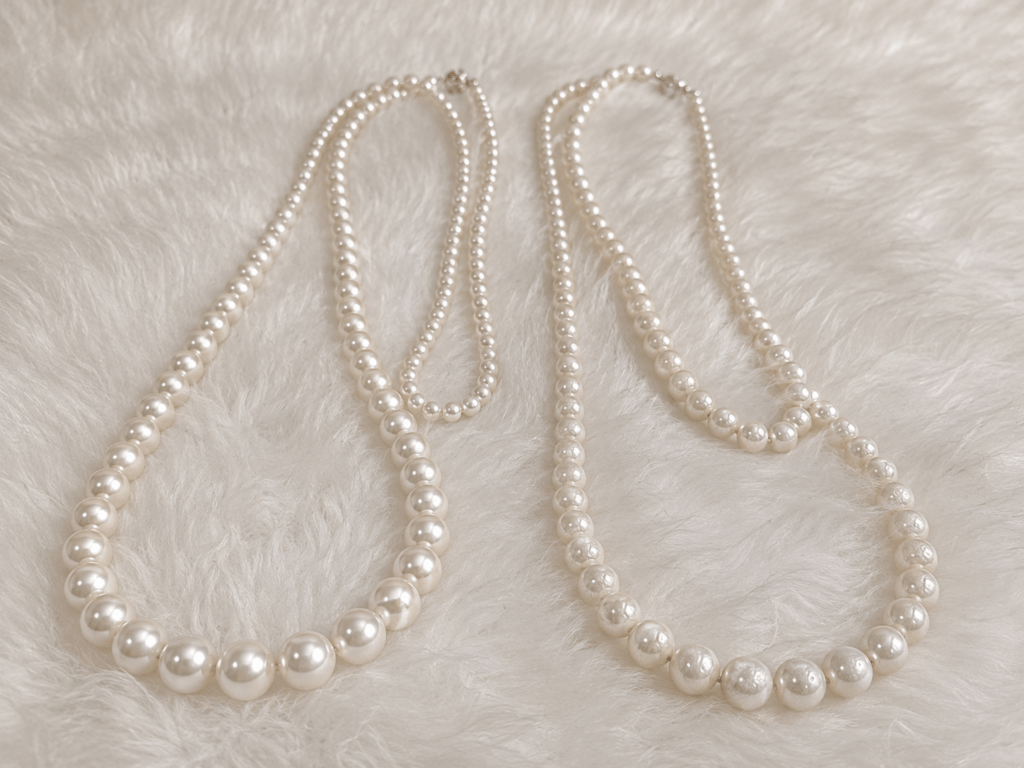
Telling real vs fake pearls apart matters more than most buyers expect. A retailer who can’t spot a fake risks losing a customer’s trust. A wholesale buyer who can’t verify stock risks paying real prices for imitation goods. Luckily, a few simple checks catch most fakes without any lab equipment.
Visual Signs to Check First
Look closely at the surface under good light. Real pearls show tiny, natural surface variations, even on high-luster pieces. Fake pearls often look too perfectly smooth and uniform. In addition, real pearls reflect light in soft, layered glow rather than one sharp shine. A glassy, single-point reflection usually signals an imitation.
Simple Physical Tests You Can Do
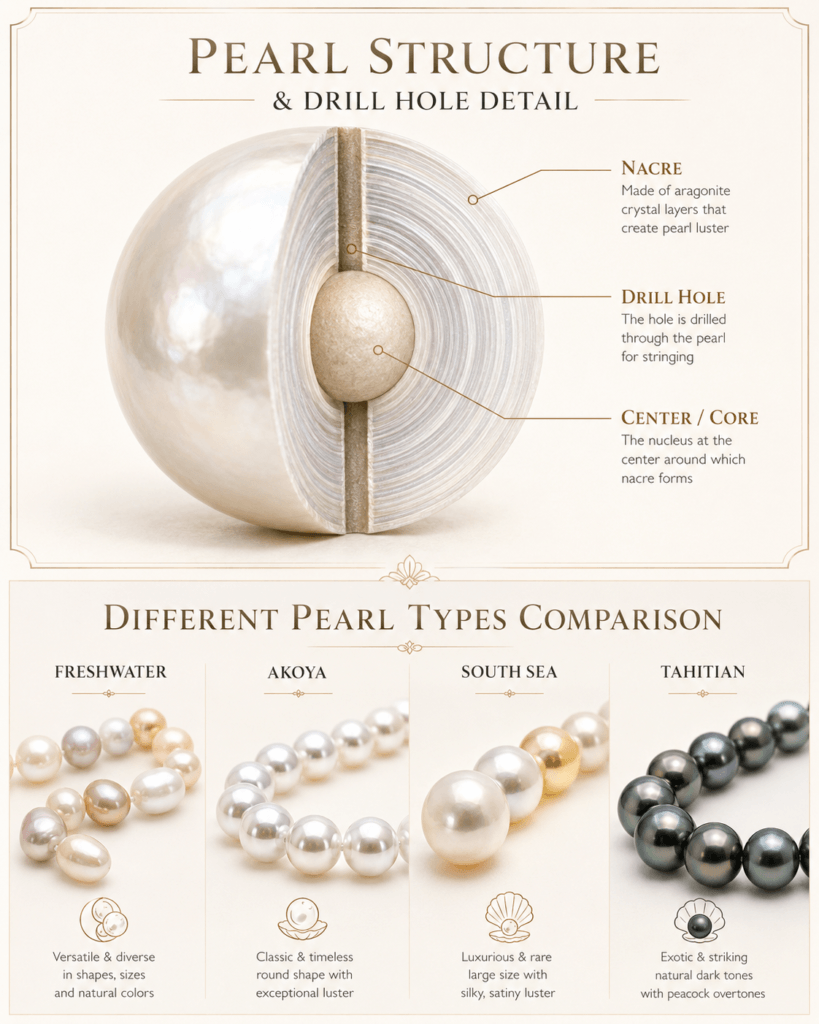
The tooth test remains the most reliable at-home method. Gently rub a pearl against the edge of your front teeth. A real pearl feels slightly gritty, because its nacre layers create texture. A fake pearl feels smooth, almost like glass or plastic. The weight test helps too. Real pearls feel a bit heavier than their size suggests, since nacre is dense. Cheap imitations often feel too light. Finally, check the drill hole if you can. Real pearls show layered nacre inside the hole. Fake pearls usually show a solid, uniform core with no layering.
Common Fakes to Watch For
Shell pearls and glass pearls are the two most common imitations in the wholesale market. Shell pearls use a shell-based bead coated in a pearl-like finish. They pass a casual glance but fail the tooth test quickly. Glass pearls are coated glass beads. They feel cold to the touch longer than real pearls, since glass conducts heat differently than nacre.
Why This Matters for Wholesale Buyers
Verification matters at every order size. A small boutique testing a new supplier needs it just as much as a larger company running a full production order. Because a bad batch is costly either way, we grade and verify every pearl in-house before it ships, so buyers don’t have to run these tests themselves on arrival. Still, knowing these checks gives any buyer confidence when evaluating a new supplier or auditing existing stock.
Explore More Pearl Guides
Looking to learn more? Browse our related guides:
- How to Evaluate Pearl Quality: Luster, Surface, Shape and Value
- Freshwater vs Akoya vs South Sea vs Tahitian Pearls: A Complete Comparison Guide
- Pearl Size Guide: How to Choose the Right Pearl Size from 2mm to 15mm
Ready to Build Your Collection?
Tell us your collection direction, target market, and customization needs — we’ll help you turn your ideas into a clear, market-ready pearl jewelry line.