
According to GIA Freshwater vs akoya vs tahitian pearls each offer distinct characteristics in origin, luster, size, and value that directly affect product positioning and pricing strategy. When selecting pearls for a jewelry collection, understanding the differences between pearl types is essential. Freshwater, Akoya, South Sea, and Tahitian pearls each offer distinct characteristics in origin, luster, size, and value — and choosing the right type directly affects your product positioning, pricing strategy, and target market.
What Are the Four Main Types of Pearls?
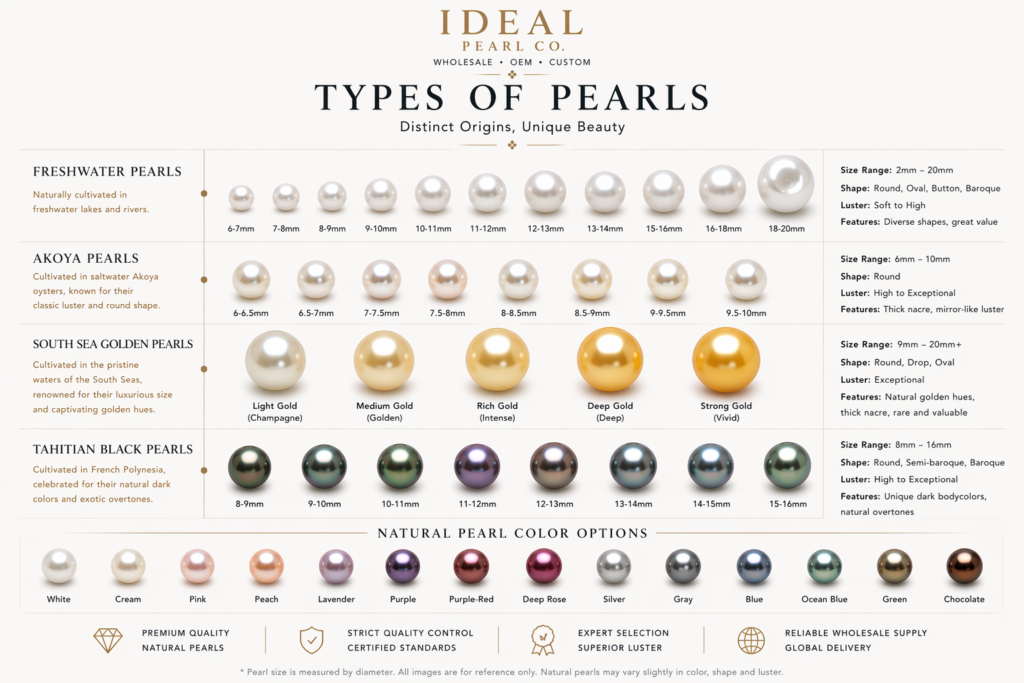
Pearls are broadly categorized by the mollusk species and the water environment in which they are cultivated. The four most commercially significant types are freshwater pearls, Akoya pearls, South Sea pearls, and Tahitian pearls. Each type serves a different segment of the jewelry market.
Freshwater Pearls
Freshwater pearls are cultivated primarily in China, using freshwater mussels rather than oysters. They are the most widely produced pearl type in the world, offering a broad range of sizes, shapes, and colors.
Key characteristics:
- Size range: 4mm to 13mm, with some baroque varieties reaching 15mm or more
- Colors: White, pink, lavender, peach, and natural mixed tones
- Luster: Soft to medium, with high-quality varieties approaching Akoya-level brilliance
- Surface: Generally good, with slight variations in shape
- Value: Most accessible price point among cultured pearls
Freshwater pearls are well suited for everyday jewelry, layered necklaces, stud earrings, and entry-level to mid-range collections. Their versatility and competitive pricing make them a strong foundation for wholesale and private label development.
Akoya Pearls
Akoya pearls are cultivated primarily in Japan and China, using the Pinctada fucata oyster in saltwater environments. They are widely regarded as the classic pearl, known for their refined round shape and brilliant luster.
Key characteristics:
- Size range: 5mm to 10mm
- Colors: White and cream, often with rose or silver overtones
- Luster: High to very high — one of the brightest among all pearl types
- Surface: Very clean and consistent
- Value: Mid to upper-mid price range
Akoya pearls are the standard choice for classic pearl necklaces, bridal jewelry, and professional collections. They appeal strongly to markets in Japan, Europe, and Australia where clean, refined aesthetics are preferred.
South Sea Pearls
South Sea pearls are produced by the Pinctada maxima oyster, cultivated primarily in Australia, Indonesia, and the Philippines. They are the largest of the commercially produced pearl types and carry significant prestige in the luxury jewelry market.
Key characteristics:
- Size range: 9mm to 20mm, averaging 12mm to 14mm
- Colors: White, silver, and golden tones
- Luster: Satiny and deep, with a distinctive warm glow
- Surface: Generally very clean, with a smooth, thick nacre
- Value: High to very high — among the most valuable cultured pearls
South Sea pearls are positioned for luxury collections, fine jewelry lines, and high-value wholesale. Their size and natural golden and white tones make them particularly desirable in the Australian and Southeast Asian markets.
Tahitian Pearls
Tahitian pearls are cultivated using the Pinctada margaritifera oyster in the lagoons of French Polynesia. They are the only pearls that occur naturally in dark tones, ranging from charcoal grey to deep green and peacock.
Key characteristics:
- Size range: 8mm to 16mm
- Colors: Black, grey, green, blue, and peacock — a full spectrum of dark overtones
- Luster: High, with a distinctive metallic depth
- Surface: Good to very good, with natural color variation
- Value: Mid-high to high price range
Tahitian pearls are favored for statement pieces, contemporary jewelry design, and collections targeting younger luxury buyers. Their bold color range offers strong visual impact and is particularly well received in European and Australian boutique markets.
Comparison Summary
| Type | Origin | Size | Color | Luster | Price Range |
|---|---|---|---|---|---|
| Freshwater | China | 4–15mm | Wide range | Soft–Medium | Accessible |
| Akoya | Japan / China | 5–10mm | White / Cream | Very High | Mid |
| South Sea | Australia / Indonesia | 9–20mm | White / Gold | Satiny | High |
| Tahitian | French Polynesia | 8–16mm | Dark tones | High | Mid-High |
Choosing the Right Pearl Type for Your Collection
The right pearl type depends on your target market, price positioning, and collection direction. For accessible everyday jewelry, freshwater pearls offer the best flexibility. For classic bridal or professional lines, Akoya pearls provide the refined finish buyers expect. For luxury and high-value collections, South Sea and Tahitian pearls deliver the prestige and visual impact that support premium pricing.
If you are developing a new collection and need guidance on pearl selection, material combinations, or sourcing options, we are happy to help you build a clear and workable direction.
Ready to Start Your Pearl Collection?
Contact us to discuss your collection direction, target market, and customization needs. We work with brands, retailers, and wholesale buyers across Australia, Europe, and beyond.
Explore More Pearl Guides
Looking to learn more? Browse our related guides:
- Pearl Size Guide: How to Choose the Right Pearl Size from 2mm to 15mm
- How to Evaluate Pearl Quality: Luster, Surface, Shape and Value
- Chain Materials for Pearl Jewelry: Gold, Silver, Vermeil and More
Ready to Build Your Collection?
Tell us your collection direction, target market, and customization needs — we’ll help you turn your ideas into a clear, market-ready pearl jewelry line.