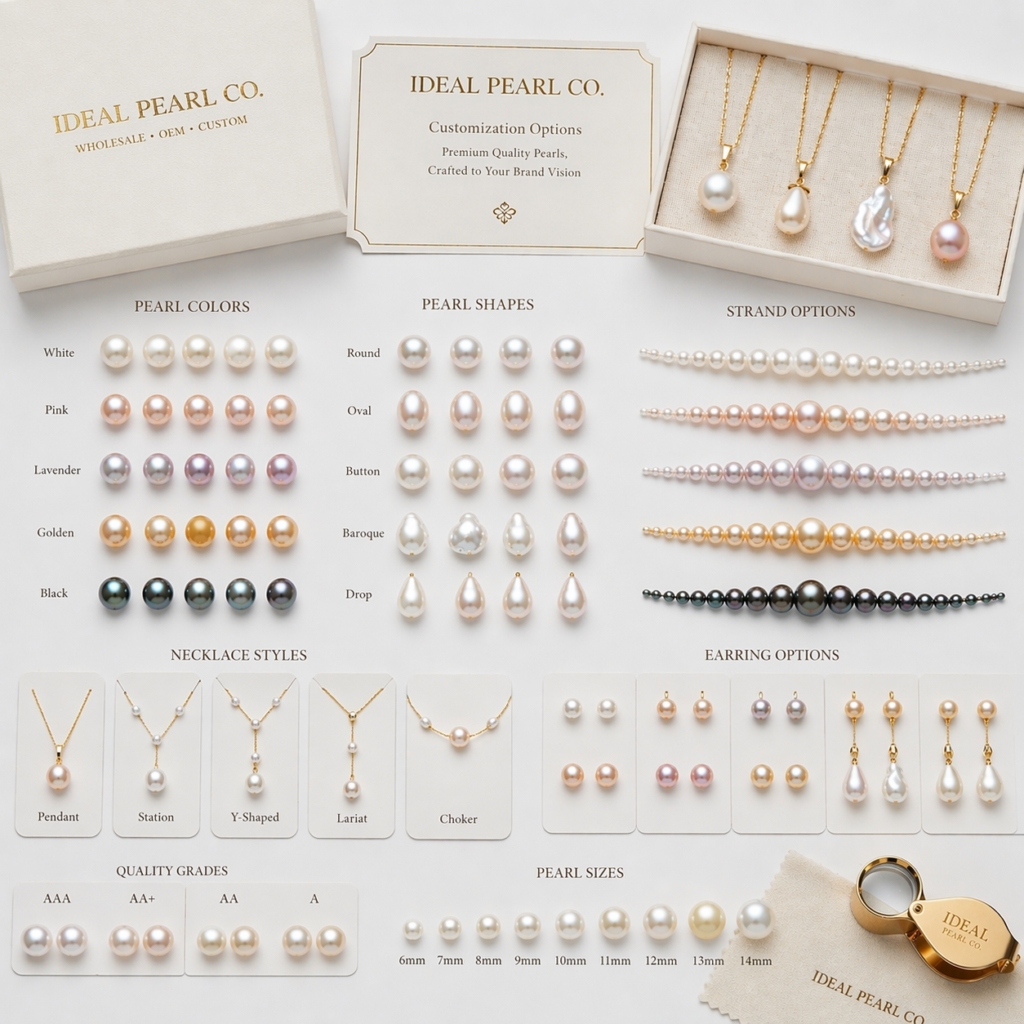
Customized pearl jewelry collections can include changes to nearly every element, from the pearl itself to the packaging it ships in. One of the most common questions from brands and buyers approaching custom pearl jewelry development for the first time is: what exactly can be changed or specified? The answer is more comprehensive than most buyers expect. From the pearl itself to the packaging it ships in, nearly every element of a pearl jewelry piece can be customized to align with a specific collection direction, target market, or brand identity.
Pearl Selection
The pearl is the starting point for any customization decision. Key variables include:
- Pearl type — Freshwater, Akoya, South Sea, or Tahitian, each offering different aesthetics and price positioning
- Size — From 2mm accent pearls to 15mm statement pieces, size affects both design and pricing
- Shape — Round, near-round, oval, button, drop, baroque, or keshi depending on the design intent
- Color — Body color and overtone can be specified to match a collection palette or target market preference
- Quality grade — Luster, surface cleanliness, and nacre thickness can be specified to match retail positioning
For most custom collections, pearl specifications are confirmed during the sampling stage after reviewing physical samples across the relevant size and quality range.
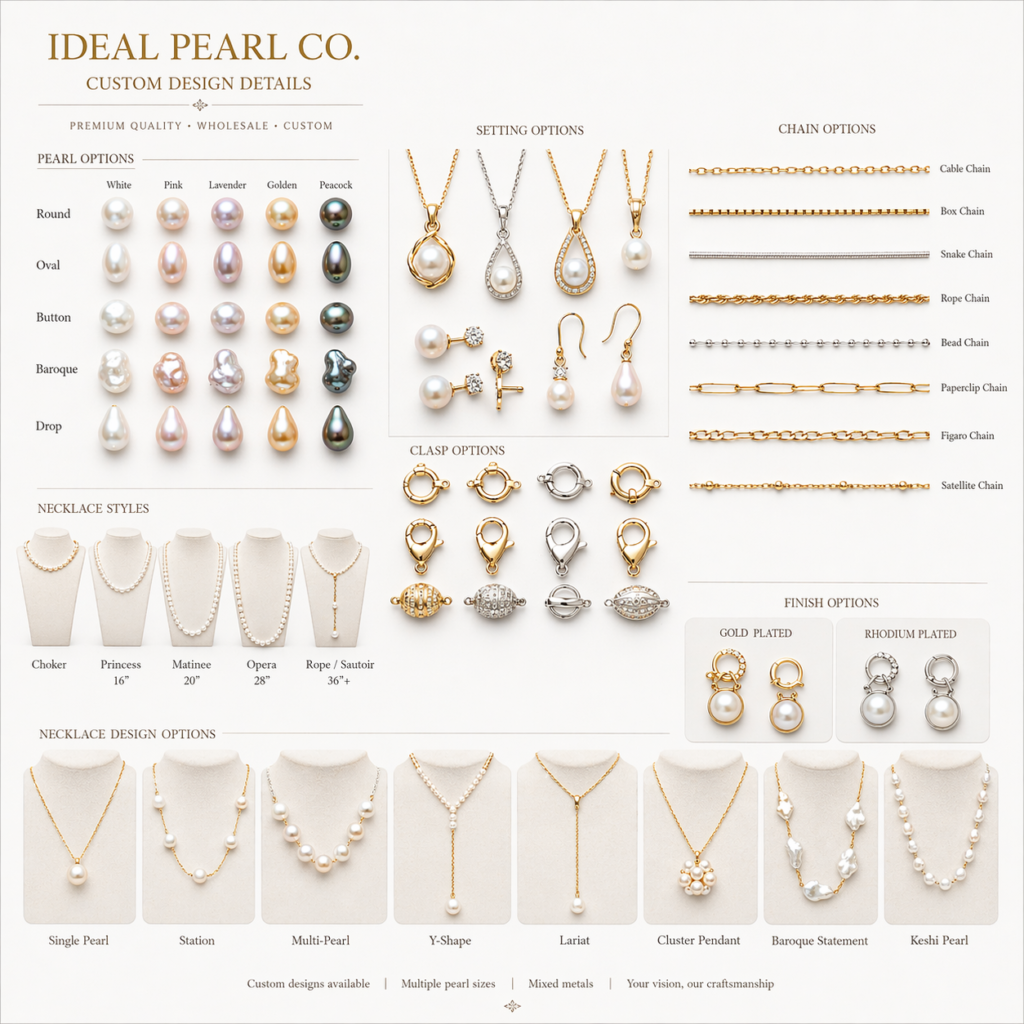
Chain and Metal Materials
The metal components of a pearl jewelry piece can be fully specified to match collection requirements and price positioning:
- Chain material — Gold-filled, sterling silver, gold vermeil, solid 9K, 14K, or 18K gold
- Chain style — Cable, Singapore, box, rope, figaro, snake, and more
- Metal color — Yellow gold, white gold, rose gold, silver
- Findings — Lobster clasps, spring ring clasps, toggle clasps, magnetic clasps
- Ear wires — Standard hooks, lever backs, studs with butterfly backs, huggie hoops
Metal selection directly affects both the aesthetic and the price point of the finished piece, so it is one of the most important customization decisions in the development process.
Necklace and Bracelet Structure
The structural format of each piece can be customized to suit the design direction:
- Length — Any length from choker to rope can be specified
- Pearl spacing — Fully pearled strands, station spacing, or single pendant formats
- Knotting — Traditional knotted strands between each pearl for classic necklaces
- Multi-strand — Two or three strand designs for layered or statement pieces
- Convertible formats — Pieces designed to be worn at multiple lengths
For wholesale collections, offering a core design in two or three lengths increases range depth without significantly adding to development complexity.
Settings and Pearl Mounting
How the pearl is mounted or set affects both the visual presentation and the durability of the piece:
- Wire-wrapped settings — Pearl is secured with wrapped wire, common in pendant and drop designs
- Glued post settings — Pearl is mounted on a metal post, used for studs and pendants
- Bezel settings — Pearl is partially encased in a metal rim, used in contemporary ring and pendant designs
- Drilled and strung — Pearl is drilled and strung on silk, nylon, or wire for strand necklaces
- Half-drilled — Pearl is mounted on a post without a full hole, used for studs and certain pendants
Setting choice affects both the manufacturing process and the final appearance of the piece, and should be confirmed during the design brief stage.
Branding Details
For private label and OEM development, branding elements can be incorporated directly into the jewelry piece and its packaging:
- Logo stamping — Brand logo stamped into clasps, tags, or metal components
- Engraving — Custom text or logo engraved on pendants, clasps, or findings
- Branded clasps — Custom-produced clasps featuring the brand name or logo
- Hang tags — Custom printed jewelry tags with brand name, material information, and care instructions
- Hallmarking — Metal purity stamps for markets where hallmarking is required
Branding details typically require a minimum order quantity to justify tooling and setup costs, and lead times for branded components should be factored into the overall development timeline.
Packaging
Packaging is a significant part of the brand experience and can be fully customized:
- Jewelry pouches — Custom printed or embossed fabric pouches in brand colors
- Jewelry boxes — Rigid boxes with custom insert, exterior print, and logo
- Gift boxes — Premium presentation boxes for retail and gifting collections
- Care cards — Printed care instruction cards with brand identity
- Outer shipping packaging — Custom printed mailer boxes for direct-to-consumer brands
Packaging customization is particularly important for private label brands where the unboxing experience is part of the product value. Standard packaging options are also available for buyers who prefer a simpler, cost-effective solution.
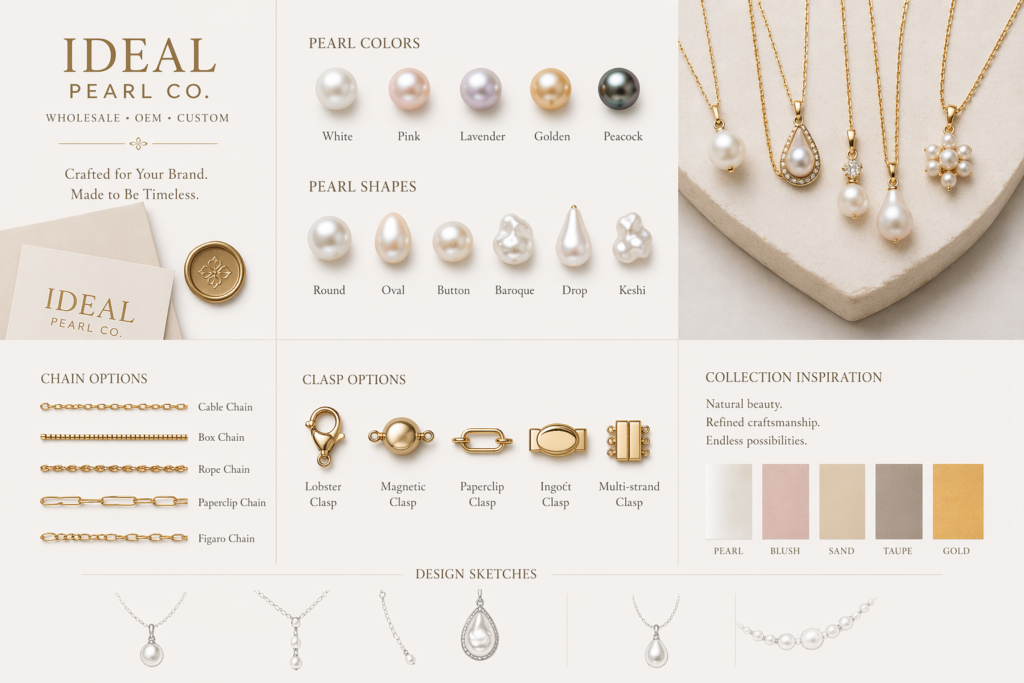
Customization Summary
| Element | Customization Options |
|---|---|
| Pearl | Type, size, shape, color, quality |
| Metal | Material, color, chain style, findings |
| Structure | Length, spacing, format, strand count |
| Setting | Wire wrap, bezel, post, strung |
| Branding | Logo stamp, engraving, hang tags |
| Packaging | Pouches, boxes, cards, mailers |
Where to Start
For buyers new to custom development, the most practical starting point is a clear brief covering three things: the aesthetic direction, the target retail price, and the intended market. From there, material and pearl selection can be narrowed down efficiently, and the development process can move forward without unnecessary revision rounds.
Explore More Pearl Guides
Looking to learn more? Browse our related guides:
- How Custom Pearl Jewelry Works: From Idea to Production
- Pearl Jewelry MOQ, Sampling & Pricing Guide
- How Pearls Are Used in Modern Jewelry Design
Ready to Start Your Custom Project?
Tell us your collection direction, target market, and customization needs — we’ll help you turn your ideas into a clear, market-ready pearl jewelry line.