
Pearls in modern jewelry design have evolved significantly beyond the classic single-strand necklace, combining with diverse materials and contemporary styles, approaches to create pieces that appeal to modern buyers across diverse markets. For brands and wholesale buyers developing new collections, understanding how pearls are applied in current design contexts helps identify opportunities that align with market demand and collection direction.
From Classic to Contemporary
The perception of pearl jewelry has shifted considerably over the past decade. While classic strand necklaces and stud earrings remain commercially strong, a growing segment of the market now seeks pearl jewelry that feels fresh, wearable, and design-forward.
This shift has opened up significant opportunities for brands willing to move beyond traditional formats and explore how pearls can be integrated into modern jewelry structures, mixed material combinations, and minimalist or statement-oriented aesthetics.
Minimalist Pearl Jewelry
Minimalist design has become one of the dominant directions in contemporary pearl jewelry, particularly in the Australian and European markets. Minimalist pearl pieces are characterized by clean lines, simple structures, and restrained use of materials.
Common minimalist applications:
- Single pearl stud earrings in 3mm to 6mm sizes
- Delicate pearl pendant necklaces on fine chain
- Single pearl ring settings in sterling silver or gold vermeil
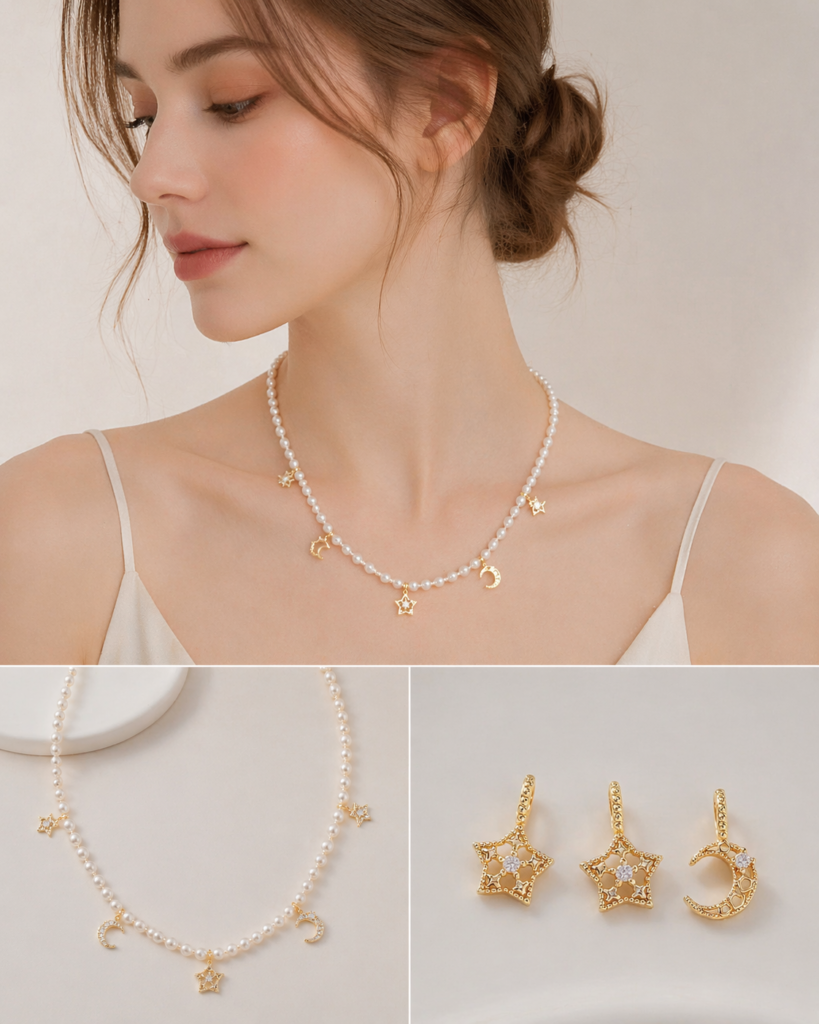
- Pearl station necklaces with evenly spaced pearls on a fine chain
Minimalist pearl jewelry appeals strongly to everyday wear buyers and younger demographics who prefer subtle, refined accessories that transition easily between casual and professional settings.
Layered and Mixed Pearl Necklaces
Layering has become a defining trend in contemporary necklace styling. Pearl necklaces designed for layering typically combine different lengths, pearl sizes, and chain materials to create a curated, effortless look.
Common layering applications:
- Mixed pearl and chain necklaces at choker and princess lengths
- Pearl lariat necklaces worn alongside short pendants
- Graduated pearl strands combined with delicate gold chains
- Pearl and gemstone mixed strand necklaces
For wholesale collections, offering necklaces designed to layer together — with complementary lengths and materials — increases average order value and gives retail buyers a complete styling proposition.
Baroque Pearl Jewelry
Baroque pearls, with their irregular organic shapes, have become one of the most commercially significant trends in contemporary pearl jewelry. Their natural imperfection aligns with a broader market preference for organic, artisan-inspired aesthetics.
Common baroque applications:
- Oversized baroque pearl pendant necklaces
- Asymmetric baroque pearl earrings
- Mixed baroque and keshi pearl strand necklaces
- Baroque pearl rings in open bezel settings
Baroque pearl jewelry performs particularly well in boutique retail environments and with buyers seeking distinctive, one-of-a-kind pieces. The irregular shapes also allow for more expressive design work and differentiation within a collection.
Pearl and Metal Combinations
Contemporary pearl jewelry increasingly combines pearls with visible metal elements as design features rather than purely structural components. Chain, wire, tube settings, and open frameworks are used to create pieces where both the pearl and the metal contribute equally to the overall aesthetic.
Common metal combination applications:
- Pearl and chain tassel earrings
- Wire-wrapped baroque pearl pendants
- Pearl drops suspended from geometric metal frames
- Tube-set pearl station necklaces with alternating metal elements
These combinations allow designers to create pieces at varied price points by adjusting pearl size and metal quality while maintaining a consistent design language across a collection.
Pearl Jewelry for Bridal and Formal Wear
Despite the growth of contemporary pearl jewelry, bridal and formal wear remain among the strongest commercial categories for pearl pieces. Classic formats — strand necklaces, stud earrings, and tennis bracelets — continue to perform consistently in this segment.
Key considerations for bridal collections:
- White and cream Akoya or freshwater pearls in 7mm to 9mm sizes
- Sterling silver or 18K white gold settings
- Matching sets — necklace, earrings, and bracelet — for gifting and bridal party coordination
- Clean, consistent surface quality for photography and close-up presentation
For wholesale buyers supplying bridal boutiques or wedding accessory retailers, a focused bridal pearl range with two or three coordinated pieces offers a strong and reliable commercial proposition.
Pearl Jewelry Design Trends by Market
| Market | Current Design Direction |
|---|---|
| Australia | Minimalist, everyday wear, baroque |
| Europe | Contemporary, mixed material, layered |
| Japan | Classic strand, high luster Akoya |
| Southeast Asia | Golden South Sea, luxury settings |
| Global Boutique | Baroque, organic, artisan-inspired |
Designing for Your Market
The most effective pearl jewelry collections are built around a clear understanding of the target buyer and their lifestyle. A boutique in Melbourne serving design-conscious buyers will need a very different collection from a wholesale buyer supplying bridal retailers across Europe.
When developing a new collection, identifying two or three core design directions — such as minimalist everyday, contemporary layering, and bridal classic — gives the range coherence while covering multiple buyer segments within a single collection.
Explore More Pearl Guides
Looking to learn more? Browse our related guides:
- Pearl Necklace Length Guide: How to Choose the Right Length for Every Style
- Chain Materials for Pearl Jewelry: Gold, Silver, Vermeil and More
- What Can Be Customized in Pearl Jewelry Collections
Ready to Build Your Collection?
Tell us your collection direction, target market, and customization needs — we’ll help you turn your ideas into a clear, market-ready pearl jewelry line.