
This pearl size guide covers everything brands and wholesale buyers need to know about selecting the right pearl size, from delicate 2mm seed pearls to statement 15mm pieces. Pearl size is one of the most important factors in jewelry design, pricing, and collection positioning. From delicate 2mm seed pearls to statement 15mm baroque pieces, each size range serves a different aesthetic, market segment, and price point. Understanding how size influences product direction helps brands, retailers, and wholesale buyers make more informed decisions when developing or sourcing pearl jewelry collections.
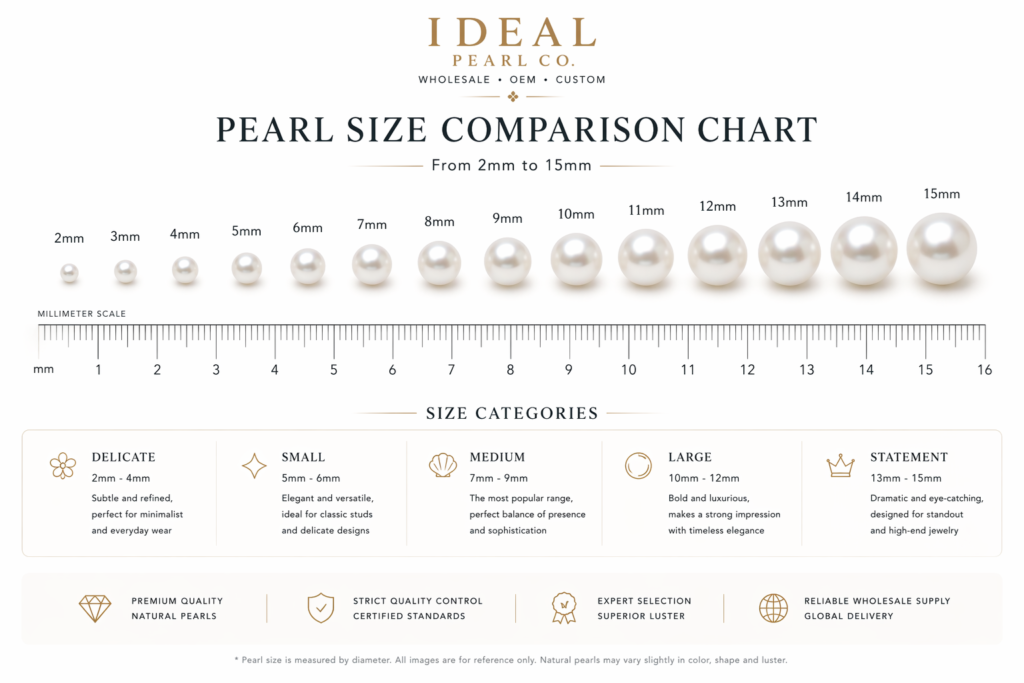
How Pearl Size Is Measured
According to GIA Pearl size is measured by diameter in millimeters. For round and near-round pearls, a single measurement is used. For baroque or oval pearls, both the length and width are typically noted. Size is one of the primary factors that determines a pearl’s value — alongside luster, surface quality, shape, and nacre thickness.
2mm to 4mm — Seed Pearls and Delicate Accents
Pearls in this size range are commonly referred to as seed pearls. They are used primarily as accent elements in jewelry design rather than as focal pieces.
Common applications:
- Accent details on bridal jewelry
- Pavé-style settings and borders
- Stud earrings for minimalist collections
- Layered necklaces with mixed materials
This size range is well suited for everyday jewelry lines and entry-level collections where subtle, refined detail is preferred.
5mm to 7mm — Classic Everyday Pearls
This is one of the most commercially popular size ranges for pearl jewelry. Pearls in this range are versatile, wearable, and accessible in price, making them a strong choice for mainstream retail and wholesale collections.
Common applications:
- Classic pearl stud earrings
- Single-strand necklaces
- Pearl bracelets
- Minimalist pendant designs
For brands targeting everyday wear, office wear, or gifting markets, 5mm to 7mm pearls offer excellent value and broad appeal.
8mm to 10mm — Standard Strand and Bridal
Pearls in this range represent the traditional standard for classic pearl necklaces and bridal jewelry. Akoya pearls fall primarily within this size range, and freshwater pearls of this size are widely used across mid-range collections.
Common applications:
- Classic single-strand pearl necklaces
- Bridal jewelry sets
- Drop earrings and pendant necklaces
- Professional and formal wear collections
This size range performs strongly in markets such as Australia, Japan, and Europe where clean, classic aesthetics are preferred.
11mm to 13mm — Statement and Premium Collections
Pearls in this size range carry a more prominent visual presence and are associated with premium and luxury positioning. South Sea pearls frequently fall within this range, as do larger freshwater baroque varieties.
Common applications:
- Statement necklaces and chokers
- Luxury pendant designs
- High-value bridal collections
- Boutique and fine jewelry lines
Collections built around 11mm to 13mm pearls typically target higher-end retail buyers, boutique stores, and customers seeking visible luxury.
14mm to 15mm — Luxury and Collector Pieces
At this size, pearls are considered large even by South Sea standards. Freshwater baroque pearls can reach this range naturally, while round pearls of this diameter are rare and command significant value.
Common applications:
- Collector and investment-grade jewelry
- Luxury statement pieces
- High-value single-pearl pendants
- Bespoke and custom commission work
This size range is best positioned for fine jewelry brands, luxury retailers, and custom development projects where exclusivity and rarity are part of the value proposition.
Size Selection by Collection Type
| Collection Type | Recommended Size Range |
|---|---|
| Everyday & Minimalist | 2mm – 6mm |
| Classic & Bridal | 7mm – 9mm |
| Mid-Range Retail | 8mm – 10mm |
| Premium Boutique | 10mm – 12mm |
| Luxury & Fine Jewelry | 12mm – 15mm |
How Size Affects Pricing
As pearl size increases, price typically rises disproportionately — a 10mm pearl is not simply twice the price of a 5mm pearl. Larger pearls require longer cultivation periods, healthier mollusks, and produce lower yields, all of which contribute to higher per-unit costs. When planning a collection, size selection should be considered alongside target retail price and market positioning to ensure a workable margin structure.
Explore More Pearl Guides
Looking to learn more? Browse our related guides:
- Freshwater vs Akoya vs South Sea vs Tahitian Pearls: A Complete Comparison Guide
- How to Evaluate Pearl Quality: Luster, Surface, Shape and Value
- Pearl Necklace Length Guide: How to Choose the Right Length for Every Style
Ready to Build Your Collection?
Tell us your collection direction, target market, and customization needs — we’ll help you turn your ideas into a clear, market-ready pearl jewelry line.